 Redirected from
 Deprecated: use github.com/ccoveille/go-safecast/v2 instead.

 README

🪄 go-safecast: safe numbers conversion




go-safecast solves the type conversion issues in Go
In Go, integer type conversion can lead to a silent and unexpected behavior and errors if not handled carefully.
This package helps to convert any number to another, and report an error when if there would be a loss or overflow in the conversion
Usage
package main

import (
  "fmt"
  "math"

  "github.com/ccoveille/go-safecast"
)

func main() {
  var a int64

  a = 42
  b, err := safecast.Convert[int16](a) // everything is fine because 42 fits in int16
  if err != nil {
    fmt.Println(err)
  }
  fmt.Println(b)

  a = 255 + 1
  _, err = safecast.Convert[uint8](a) // 256 is greater than uint8 maximum value
  if err != nil {
    // Output: conversion issue: 256 (int64) is greater than 255 (uint8): maximum value for this type exceeded
    fmt.Println(err)
  }

  a = -1
  _, err = safecast.Convert[uint64](a) // -1 cannot fit in uint64
  if err != nil {
    // Output: conversion issue: -1 (int64) is less than 0 (uint64): minimum value for this type exceeded
    fmt.Println(err)
  }

  str := "\x99" // ASCII code 153 for Trademark symbol
  e := str[0] // e is a rune (uint8)
  _, err = safecast.Convert[int8](e)
  if err != nil {
    // Output: conversion issue: 153 (uint8) is greater than 127 (int8): maximum value for this type exceeded
    fmt.Println(err)
  }
}
Conversion issues
Issues can happen when converting between signed and unsigned integers, or when converting to a smaller integer type.
package main

import "fmt"

func main() {
  var a int64
  a = 42
  b := uint8(a)
  fmt.Println(b) // 42

  a = 255 // this is the math.MaxUint8
  b = uint8(a)
  fmt.Println(b) // 255

  a = 255 + 1
  b = uint8(a)
  fmt.Println(b) // 0 conversion overflow

  a = -1
  b = uint8(a)
  fmt.Println(b) // 255 conversion overflow
}
So you need to adapt your code to write something like this.
package main

import "fmt"

func main() {
  var a int64
  a = 42
  if a < 0 || a > math.MaxUint8 {
    log.Println("overflow") // Output: overflow
  }
  fmt.Println(b) // 42

  a = 255 // this is the math.MaxUint8
  b = uint8(a)
  fmt.Println(b) // 255

  a = 255 + 1
  b = uint8(a)
  if a < 0 || a > math.MaxUint8 {
    log.Println("overflow") // Output: overflow
  }
  fmt.Println(b) // Output: 0

  a = -1
  b = uint8(a)
  if a < 0 || a > math.MaxUint8 {
    log.Println("overflow") // Output: overflow
  }
  fmt.Println(b) // Output:255
}
go-safecast is there to avoid boilerplate copy pasta.
Motivation
The gosec project raised this to my attention when the gosec G115 rule was added
G115: Potential overflow when converting between integer types.
This issue was way more complex than expected, and required multiple fixes.
CWE-190 explains in detail.
But to sum it up, you can face:
- infinite loop
- access to wrong resource by id
- grant access to someone who exhausted their quota
The gosec G115 will now report issues in a lot of project.
Alternatives
Some libraries existed, but they were not able to cover all the use cases.
-
github.com/rung/go-safecast: Unmaintained, not architecture agnostic, do not support
uint->intconversion -
github.com/cybergarage/go-safecast Work with pointer like
json.Marshall
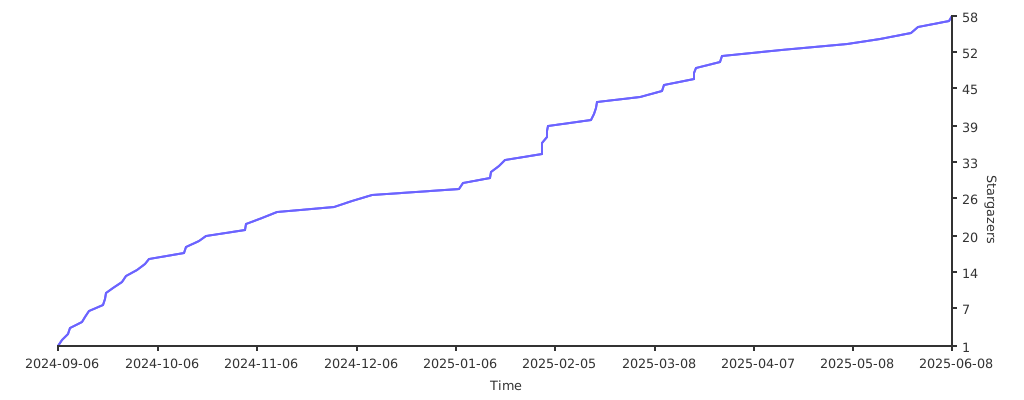
Stargazers over time
 Documentation

Overview 
Package safecast solves the type conversion issues in Go
In Go, integer type conversion can lead to unexpected behavior and errors if not handled carefully. Issues can happen when converting between signed and unsigned integers, or when converting to a smaller integer type.
Example 
package main

import (
	"fmt"

	"github.com/ccoveille/go-safecast"
)

func main() {
	var a int64

	a = 42
	b, err := safecast.Convert[int16](a) // everything is fine because 42 fits in int16
	if err != nil {
		fmt.Println(err)
	}
	fmt.Println(b)

	a = 255 + 1
	_, err = safecast.Convert[uint8](a) // 256 is greater than uint8 maximum value
	if err != nil {
		fmt.Println(err)
	}

	a = -1
	_, err = safecast.Convert[uint64](a) // -1 cannot fit in uint64
	if err != nil {
		fmt.Println(err)
	}

	str := "\x99" // ASCII code 153 for Trademark symbol
	e := str[0]
	_, err = safecast.Convert[int8](e)
	if err != nil {
		fmt.Println(err)
	}

}
Output:
42
conversion issue: 256 (int64) is greater than 255 (uint8): maximum value for this type exceeded
conversion issue: -1 (int64) is less than 0 (uint64): minimum value for this type exceeded
conversion issue: 153 (uint8) is greater than 127 (int8): maximum value for this type exceeded
Index 
- Variables
- func Convert[NumOut Number, NumIn Input](orig NumIn) (converted NumOut, err error)
- func MustConvert[NumOut Number, NumIn Input](orig NumIn) NumOut
- func RequireConvert[NumOut Number, NumIn Input](t TestingT, orig NumIn) (converted NumOut)
- func ToFloat32[T Number](i T) (float32, error)deprecated
- func ToFloat64[T Number](i T) (float64, error)deprecated
- func ToInt[T Number](i T) (int, error)deprecated
- func ToInt8[T Number](i T) (int8, error)deprecated
- func ToInt16[T Number](i T) (int16, error)deprecated
- func ToInt32[T Number](i T) (int32, error)deprecated
- func ToInt64[T Number](i T) (int64, error)deprecated
- func ToUint[T Number](i T) (uint, error)deprecated
- func ToUint8[T Number](i T) (uint8, error)deprecated
- func ToUint16[T Number](i T) (uint16, error)deprecated
- func ToUint32[T Number](i T) (uint32, error)deprecated
- func ToUint64[T Number](i T) (uint64, error)deprecated
- type Float
- type Input
- type Integer
- type Number
- type Signed
- type TestingT
- type Unsigned
Examples 
- Package
- Convert
- RequireConvert (Failure)
- RequireConvert (Success)
- ToFloat32
- ToFloat32 (Deprecation)
- ToFloat64
- ToFloat64 (Deprecation)
- ToInt
- ToInt (Deprecation)
- ToInt8
- ToInt8 (Deprecation)
- ToInt16
- ToInt16 (Deprecation)
- ToInt32
- ToInt32 (Deprecation)
- ToInt64
- ToInt64 (Deprecation)
- ToUint
- ToUint8
- ToUint8 (Deprecation)
- ToUint16
- ToUint16 (Deprecation)
- ToUint32
- ToUint32 (Deprecation)
- ToUint64
- ToUint64 (Deprecation)
Constants 
This section is empty.
Variables 
var ErrConversionIssue = errors.New("conversion issue")
ErrConversionIssue is a generic error for type conversion issues It is used to wrap other errors
var ErrExceedMaximumValue = errors.New("maximum value for this type exceeded")
ErrExceedMaximumValue is an error for when the value is greater than the maximum value of the desired type.
var ErrExceedMinimumValue = errors.New("minimum value for this type exceeded")
ErrExceedMinimumValue is an error for when the value is less than the minimum value of the desired type.
var ErrRangeOverflow = errors.New("range overflow")
ErrRangeOverflow is an error for when the value is outside the range of the desired type
var ErrStringConversion = errors.New("cannot convert from string")
ErrStringConversion is an error for when the conversion fails from string.
var ErrUnsupportedConversion = errors.New("unsupported type")
ErrUnsupportedConversion is an error for when the conversion is not supported from the provided type.
Functions 
func Convert ¶ added in v1.4.0
Convert attempts to convert any value to the desired type
- If the conversion is possible, the converted value is returned.
- If the conversion results in a value outside the range of the desired type, an ErrRangeOverflow error is wrapped in the returned error.
- If the conversion exceeds the maximum value of the desired type, an ErrExceedMaximumValue error is wrapped in the returned error.
- If the conversion exceeds the minimum value of the desired type, an ErrExceedMinimumValue error is wrapped in the returned error.
- If the conversion is not possible for the desired type, an ErrUnsupportedConversion error is wrapped in the returned error.
- If the conversion fails from string, an ErrStringConversion error is wrapped in the returned error.
- If the conversion results in an error, an ErrConversionIssue error is wrapped in the returned error.
Example 
package main

import (
	"fmt"

	"github.com/ccoveille/go-safecast"
)

func main() {
	b, err := safecast.Convert[int8](true)
	fmt.Println(b, err)

	b, err = safecast.Convert[int8]("true")
	fmt.Println(b, err)

	c, err := safecast.Convert[int16](17.1)
	fmt.Println(c, err)

	c, err = safecast.Convert[int16](int64(17))
	fmt.Println(c, err)

	d, err := safecast.Convert[int32]("17.1")
	fmt.Println(d, err)

	i, err := safecast.Convert[uint]("100_000")
	fmt.Println(i, err)

	i, err = safecast.Convert[uint]("0b11")
	fmt.Println(i, err)

	i, err = safecast.Convert[uint]("0x11")
	fmt.Println(i, err)

	a := int8(-1)
	i, err = safecast.Convert[uint](a)
	fmt.Println(i, err)

	i, err = safecast.Convert[uint]("-1")
	fmt.Println(i, err)

	i, err = safecast.Convert[uint]("abc")
	fmt.Println(i, err)

	i, err = safecast.Convert[uint]("-1.1")
	fmt.Println(i, err)

	i, err = safecast.Convert[uint](".12345E+5")
	fmt.Println(i, err)

}
Output:
1 <nil>
1 <nil>
17 <nil>
17 <nil>
17 <nil>
100000 <nil>
3 <nil>
17 <nil>
0 conversion issue: -1 (int8) is less than 0 (uint): minimum value for this type exceeded
0 conversion issue: -1 (int64) is less than 0 (uint): minimum value for this type exceeded
0 conversion issue: cannot convert from `abc` to uint (base auto-detection)
0 conversion issue: -1.1 (float64) is less than 0 (uint): minimum value for this type exceeded
12345 <nil>
func MustConvert ¶ added in v1.5.0
MustConvert calls Convert to convert the value to the desired type, and panics if the conversion fails.
func RequireConvert ¶ added in v1.7.0
RequireConvert is a test helper that calls Convert that converts the value to the desired type, and fails the test if the conversion fails.
Example (Failure) 
This example shows how safecast.RequireConvert reacts when the conversion fails
An error is raised via testing.T.Fatal if the conversion fails.
package main

import (
	"fmt"

	"github.com/ccoveille/go-safecast"
)

// mockTestingTExample is a mock implementation of the [safecast.TestingT] interface
// its purpose is to display the error message in the [ExampleRequireConvert_failure].
type mockTestingTExample struct {
	failed bool
}

func (m *mockTestingTExample) Helper() {}

func (m *mockTestingTExample) Fatal(args ...any) {

	fmt.Printf("--- FAIL:\n\t")
	fmt.Println(args...)
	m.failed = true
}

func (m mockTestingTExample) Failed() bool {
	return m.failed
}

func main() {
	t := new(mockTestingTExample) // use *testing.T, *testing.B, or *testing.F here

	_ = safecast.RequireConvert[uint8](t, "foo")
	// here an error is raised via [testing.T.Fatal]

}
Output:
--- FAIL:
	conversion issue: cannot convert from `foo` to uint8 (base auto-detection)
Example (Success) 
This example shows how to use safecast.RequireConvert to convert a value in a test
Here t is a mock implementation of the safecast.TestingT interface you can use any type that implements this interface, such as *testing.T, *testing.B, or *testing.F
t := new(mockTestingT)

out := safecast.RequireConvert[uint8](t, 42.0)
fmt.Println(out, t.Failed())
Output:
42 false
func ToFloat32
deprecated
added in
v1.3.0
ToFloat32 attempts to convert any Number value to a float32. If the conversion results in a value outside the range of a float32, an ErrConversionIssue error is returned.
Deprecated: use Convert instead with Convert[float32](i)
Example 
package main

import (
	"fmt"
	"math"

	"github.com/ccoveille/go-safecast"
)

func main() {
	a := int8(42)
	i, err := safecast.ToFloat32(a)
	fmt.Println(i, err)

	b := math.MaxFloat64
	i, err = safecast.ToFloat32(b)
	fmt.Println(i, err)

}
Output:
42 <nil>
0 conversion issue: 1.7976931348623157e+308 (float64) is greater than 3.4028235e+38 (float32): maximum value for this type exceeded
Example (Deprecation) 
package main

import (
	"fmt"
	"math"

	"github.com/ccoveille/go-safecast"
)

func main() {
	// Example showing the use of the [safecast.Convert] function as a replacement for the deprecated [safecast.ToFloat32] function.

	a := int8(42)
	i, err := safecast.Convert[float32](a)
	fmt.Println(i, err)

	b := math.MaxFloat64
	_, err = safecast.Convert[float32](b)
	fmt.Println(err)

}
Output:
42 <nil>
conversion issue: 1.7976931348623157e+308 (float64) is greater than 3.4028235e+38 (float32): maximum value for this type exceeded
func ToFloat64
deprecated
added in
v1.3.0
ToFloat64 attempts to convert any Number value to a float64. If the conversion results in a value outside the range of a float64, an ErrConversionIssue error is returned.
Deprecated: use Convert instead with Convert[float64](i)
Example 
package main

import (
	"fmt"
	"math"

	"github.com/ccoveille/go-safecast"
)

func main() {
	a := int8(42)
	i, err := safecast.ToFloat64(a)
	fmt.Println(i, err)

	b := math.MaxFloat64
	i, err = safecast.ToFloat64(b)
	fmt.Println(i, err)

}
Output:
42 <nil>
1.7976931348623157e+308 <nil>
Example (Deprecation) 
package main

import (
	"fmt"
	"math"

	"github.com/ccoveille/go-safecast"
)

func main() {
	// Example showing the use of the [safecast.Convert] function as a replacement for the deprecated [safecast.ToFloat64] function.

	a := int8(42)
	i, err := safecast.Convert[float64](a)
	fmt.Println(i, err)

	b := math.MaxFloat64
	i, err = safecast.Convert[float64](b)
	fmt.Println(i, err)

}
Output:
42 <nil>
1.7976931348623157e+308 <nil>
func ToInt
deprecated
ToInt attempts to convert any Number value to an int. If the conversion results in a value outside the range of an int, an ErrConversionIssue error is returned.
Deprecated: use Convert instead with Convert[int](i)
Example 
package main

import (
	"fmt"
	"math"

	"github.com/ccoveille/go-safecast"
)

func main() {
	a := uint64(42)
	i, err := safecast.ToInt(a)
	fmt.Println(i, err)

	b := float32(math.MaxFloat32)
	i, err = safecast.ToInt(b)
	fmt.Println(i, err)
}
Output:
42 <nil>
0 conversion issue: 3.4028235e+38 (float32) is greater than 9223372036854775807 (int): maximum value for this type exceeded
Example (Deprecation) 
package main

import (
	"fmt"
	"math"

	"github.com/ccoveille/go-safecast"
)

func main() {
	// Example showing the use of the [safecast.Convert] function as a replacement for the deprecated [safecast.ToInt] function.

	a := uint64(42)
	i, err := safecast.Convert[int](a)
	fmt.Println(i, err)

	b := float32(math.MaxFloat32)
	_, err = safecast.Convert[int](b)

	fmt.Println(err)

}
Output:
42 <nil>
conversion issue: 3.4028235e+38 (float32) is greater than 9223372036854775807 (int): maximum value for this type exceeded
func ToInt8
deprecated
ToInt8 attempts to convert any Number value to an int8. If the conversion results in a value outside the range of an int8, an ErrConversionIssue error is returned.
Deprecated: use Convert instead with Convert[int8](i)
Example 
package main

import (
	"fmt"

	"github.com/ccoveille/go-safecast"
)

func main() {
	a := float64(42.42)
	i, err := safecast.ToInt8(a)
	fmt.Println(i, err)

	a = float64(200.42)
	i, err = safecast.ToInt8(a)
	fmt.Println(i, err)

}
Output:
42 <nil>
0 conversion issue: 200.42 (float64) is greater than 127 (int8): maximum value for this type exceeded
Example (Deprecation) 
package main

import (
	"fmt"

	"github.com/ccoveille/go-safecast"
)

func main() {
	// Example showing the use of the [safecast.Convert] function as a replacement for the deprecated [safecast.ToInt8] function.

	a := float64(42.42)
	i, err := safecast.Convert[int8](a)
	fmt.Println(i, err)

	a = float64(200.42)
	_, err = safecast.Convert[int8](a)
	fmt.Println(err)

}
Output:
42 <nil>
conversion issue: 200.42 (float64) is greater than 127 (int8): maximum value for this type exceeded
func ToInt16
deprecated
ToInt16 attempts to convert any Number value to an int16. If the conversion results in a value outside the range of an int16, an ErrConversionIssue error is returned.
Deprecated: use Convert instead with Convert[int16](i)
Example 
package main

import (
	"fmt"

	"github.com/ccoveille/go-safecast"
)

func main() {
	a := int32(42)
	i, err := safecast.ToInt16(a)
	fmt.Println(i, err)

	a = int32(40000)
	i, err = safecast.ToInt16(a)
	fmt.Println(i, err)
}
Output:
42 <nil>
0 conversion issue: 40000 (int32) is greater than 32767 (int16): maximum value for this type exceeded
Example (Deprecation) 
package main

import (
	"fmt"

	"github.com/ccoveille/go-safecast"
)

func main() {
	// Example showing the use of the [safecast.Convert] function as a replacement for the deprecated [safecast.ToInt16] function.

	a := int32(42)
	i, err := safecast.Convert[int16](a)
	fmt.Println(i, err)

	a = int32(40000)
	_, err = safecast.Convert[int16](a)
	fmt.Println(err)

}
Output:
42 <nil>
conversion issue: 40000 (int32) is greater than 32767 (int16): maximum value for this type exceeded
func ToInt32
deprecated
ToInt32 attempts to convert any Number value to an int32. If the conversion results in a value outside the range of an int32, an ErrConversionIssue error is returned.
Deprecated: use Convert instead with Convert[int32](i)
Example 
package main

import (
	"fmt"
	"math"

	"github.com/ccoveille/go-safecast"
)

func main() {
	a := int(42)
	i, err := safecast.ToInt32(a)
	fmt.Println(i, err)

	b := uint32(math.MaxInt32) + 1
	i, err = safecast.ToInt32(b)
	fmt.Println(i, err)

}
Output:
42 <nil>
0 conversion issue: 2147483648 (uint32) is greater than 2147483647 (int32): maximum value for this type exceeded
Example (Deprecation) 
package main

import (
	"fmt"
	"math"

	"github.com/ccoveille/go-safecast"
)

func main() {
	// Example showing the use of the [safecast.Convert] function as a replacement for the deprecated [safecast.ToInt32] function.

	a := int(42)
	i, err := safecast.Convert[int32](a)
	fmt.Println(i, err)

	b := uint32(math.MaxInt32) + 1
	_, err = safecast.Convert[int32](b)
	fmt.Println(err)

}
Output:
42 <nil>
conversion issue: 2147483648 (uint32) is greater than 2147483647 (int32): maximum value for this type exceeded
func ToInt64
deprecated
ToInt64 attempts to convert any Number value to an int64. If the conversion results in a value outside the range of an int64, an ErrConversionIssue error is returned.
Deprecated: use Convert instead with Convert[int64](i)
Example 
package main

import (
	"fmt"
	"math"

	"github.com/ccoveille/go-safecast"
)

func main() {
	a := uint64(42)
	i, err := safecast.ToInt64(a)
	fmt.Println(i, err)

	a = uint64(math.MaxInt64) + 1
	i, err = safecast.ToInt64(a)
	fmt.Println(i, err)

}
Output:
42 <nil>
0 conversion issue: 9223372036854775808 (uint64) is greater than 9223372036854775807 (int64): maximum value for this type exceeded
Example (Deprecation) 
package main

import (
	"fmt"
	"math"

	"github.com/ccoveille/go-safecast"
)

func main() {
	// Example showing the use of the [safecast.Convert] function as a replacement for the deprecated [safecast.ToInt64] function.

	a := uint64(42)
	i, err := safecast.Convert[uint64](a)
	fmt.Println(i, err)

	a = uint64(math.MaxInt64) + 1
	_, err = safecast.Convert[int64](a)
	fmt.Println(err)

}
Output:
42 <nil>
conversion issue: 9223372036854775808 (uint64) is greater than 9223372036854775807 (int64): maximum value for this type exceeded
func ToUint
deprecated
ToUint attempts to convert any Number value to an uint. If the conversion results in a value outside the range of an uint, an ErrConversionIssue error is returned.
Deprecated: use Convert instead with Convert[uint](i)
Example 
package main

import (
	"fmt"

	"github.com/ccoveille/go-safecast"
)

func main() {
	a := int8(42)
	i, err := safecast.ToUint(a)
	fmt.Println(i, err)

	a = int8(-1)
	i, err = safecast.ToUint(a)
	fmt.Println(i, err)

}
Output:
42 <nil>
0 conversion issue: -1 (int8) is less than 0 (uint): minimum value for this type exceeded
func ToUint8
deprecated
ToUint8 attempts to convert any Number value to an uint8. If the conversion results in a value outside the range of an uint8, an ErrConversionIssue error is returned.
Deprecated: use Convert instead with Convert[uint8](i)
Example 
package main

import (
	"fmt"

	"github.com/ccoveille/go-safecast"
)

func main() {
	a := int64(42)
	i, err := safecast.ToUint8(a)
	fmt.Println(i, err)

	a = int64(-1)
	i, err = safecast.ToUint8(a)
	fmt.Println(i, err)

}
Output:
42 <nil>
0 conversion issue: -1 (int64) is less than 0 (uint8): minimum value for this type exceeded
Example (Deprecation) 
package main

import (
	"fmt"

	"github.com/ccoveille/go-safecast"
)

func main() {
	// Example showing the use of the [safecast.Convert] function as a replacement for the deprecated [safecast.ToUint8] function.

	a := int64(42)
	i, err := safecast.Convert[uint8](a)
	fmt.Println(i, err)
	a = int64(-1)
	_, err = safecast.Convert[uint8](a)
	fmt.Println(err)

}
Output:
42 <nil>
conversion issue: -1 (int64) is less than 0 (uint8): minimum value for this type exceeded
func ToUint16
deprecated
ToUint16 attempts to convert any Number value to an uint16. If the conversion results in a value outside the range of an uint16, an ErrConversionIssue error is returned.
Deprecated: use Convert instead with Convert[uint16](i)
Example 
package main

import (
	"fmt"

	"github.com/ccoveille/go-safecast"
)

func main() {
	a := int64(42)
	i, err := safecast.ToUint16(a)
	fmt.Println(i, err)

	a = int64(-1)
	i, err = safecast.ToUint16(a)
	fmt.Println(i, err)
}
Output:
42 <nil>
0 conversion issue: -1 (int64) is less than 0 (uint16): minimum value for this type exceeded
Example (Deprecation) 
package main

import (
	"fmt"

	"github.com/ccoveille/go-safecast"
)

func main() {
	// Example showing the use of the [safecast.Convert] function as a replacement for the deprecated [safecast.ToUint16] function.

	a := int64(42)
	i, err := safecast.Convert[uint16](a)
	fmt.Println(i, err)

	a = int64(-1)
	_, err = safecast.Convert[uint16](a)
	fmt.Println(err)

}
Output:
42 <nil>
conversion issue: -1 (int64) is less than 0 (uint16): minimum value for this type exceeded
func ToUint32
deprecated
ToUint32 attempts to convert any Number value to an uint32. If the conversion results in a value outside the range of an uint32, an ErrConversionIssue error is returned.
Deprecated: use Convert instead with Convert[uint32](i)
Example 
package main

import (
	"fmt"

	"github.com/ccoveille/go-safecast"
)

func main() {
	a := int16(42)
	i, err := safecast.ToUint32(a)
	fmt.Println(i, err)

	a = int16(-1)
	i, err = safecast.ToUint32(a)
	fmt.Println(i, err)

}
Output:
42 <nil>
0 conversion issue: -1 (int16) is less than 0 (uint32): minimum value for this type exceeded
Example (Deprecation) 
package main

import (
	"fmt"

	"github.com/ccoveille/go-safecast"
)

func main() {
	// Example showing the use of the [safecast.Convert] function as a replacement for the deprecated [safecast.ToUint32] function.

	a := int16(42)
	i, err := safecast.Convert[uint32](a)
	fmt.Println(i, err)

	a = int16(-1)
	_, err = safecast.Convert[uint32](a)
	fmt.Println(err)
}
Output:
func ToUint64
deprecated
ToUint64 attempts to convert any Number value to an uint64. If the conversion results in a value outside the range of an uint64, an ErrConversionIssue error is returned.
Deprecated: use Convert instead with Convert[uint64](i)
Example 
package main

import (
	"fmt"

	"github.com/ccoveille/go-safecast"
)

func main() {
	a := int8(42)
	i, err := safecast.ToUint64(a)
	fmt.Println(i, err)

	a = int8(-1)
	i, err = safecast.ToUint64(a)
	fmt.Println(i, err)

}
Output:
42 <nil>
0 conversion issue: -1 (int8) is less than 0 (uint64): minimum value for this type exceeded
Example (Deprecation) 
package main

import (
	"fmt"

	"github.com/ccoveille/go-safecast"
)

func main() {
	// Example showing the use of the [safecast.Convert] function as a replacement for the deprecated [safecast.ToUint64] function.

	a := int8(42)
	i, err := safecast.Convert[uint64](a)
	fmt.Println(i, err)

	a = int8(-1)
	_, err = safecast.Convert[uint64](a)
	fmt.Println(err)

}
Output:
42 <nil>
conversion issue: -1 (int8) is less than 0 (uint64): minimum value for this type exceeded
Types 
type Input ¶ added in v1.6.0
Input is a constraint for all types that can be used as input for Convert, and MustConvert
type Number 
Number is a constraint for all integers and floats TODO: consider using complex, but not sure there is a need
type Signed ¶ added in v1.1.0
Signed is a constraint for all signed integers: int, int8, int16, int32, and int64 types.
type TestingT ¶ added in v1.7.0
type TestingT interface {
	Helper()
	Fatal(args ...any)
}
TestingT is an interface wrapper used by RequireConvert that we need for testing purposes.
Only the methods used by RequireConvert are expected to be implemented.
*testing.T, *testing.B, or *testing.F types satisfy this interface.
 Source Files