

 README

README

frog
Overview
Frog is a package for logging output.
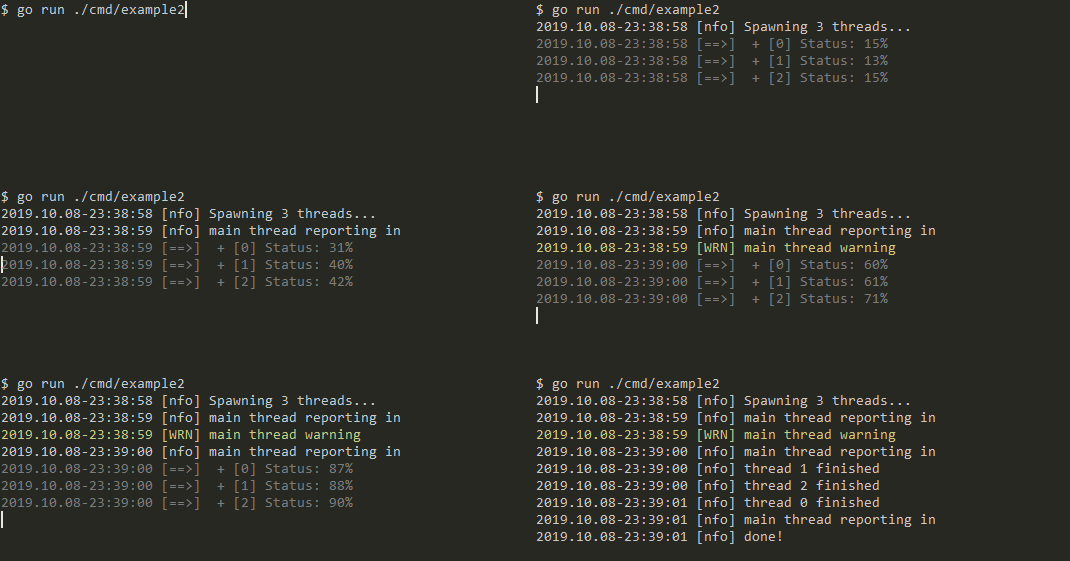
When connected to a terminal, Frog allows lines to be fixed to the bottom of the output and updated quickly and efficiently. This allows for display of data that would be surperfluous in a log file, but is really nice to have when watching the output in a terminal.
Frog uses ANSI/VT-100 commands to change colors and move the cursor. Most terminals support these commands, although Windows is a special case. Windows consoles (cmd, powershell) only support ANSI in the more recent Windows 10 builds. Older versions of Windows require a third-party terminal like ConEmu/Cmdr or mintty to display Frog's colors and fixed lines properly.
Features
- Multiple logging levels
- Fixing one or more lines in place for progress bars and real-time status displays (via ANSI commands)
- Colorized output (via ANSI commands)
- Autodetection of connected terminal, and disabling of ANSI-based output as needed.
- Loggers target the io.Writer interface, allowing your logs to be easily sent to files, buffers, etc.
- Customizable line style, currently supporting a simple plain text format, as well as JSON
- Alternatively, you can write your own
Printerthat can style each line however you like
- Alternatively, you can write your own
- Loggers can easily be written to target other loggers (see
TeeLogger)
Usage
The quickest way to get started is to create one of the default Loggers via a call to New:
  log := frog.New(frog.Auto)
  defer log.Close()

  log.Infof("My first boring log line")
  log.Warningf("Also boring")

  status := frog.AddFixedLine(log)
  for i := 0; i <= 100; i++ {
    status.Transientf(" + %d%% complete", n)
    time.Sleep(time.Duration(10) * time.Millisecond)
  }
  status.Infof("Still boring!", n)
frog.Auto will use a Buffered Logger, but will only use ANSI if there's a detected terminal, and only displays color if ANSI is supported and if there's no NO_COLOR environment variable.
Another option is frog.JSON, which uses an Unbuffered Logger that formats each log line as a single JSON object. Switching the previous code example is as simple as changing the first line:
  log := frog.New(frog.JSON)
  ⋮
Notice that when you run this second example, all the Transient lines are not output. Transient lines are by default only output when sent to a Logger responsible for a fixed line.
Also notice that when we want to create a fixed line, we make a call on the frog package, and not directly to our Logger. Logger is an interface, and most implementations of that interface will probably not care about fixed lines, so it was decided not to make it a mandatory part of the Logger interface. Instead, any Logger that wants to support fixed liens will need to implement not only the Logger interface, but also the FixedLineAdder interface, which is what AddFixedLine looks for on the passed in Logger.
Here's a complete list of Frog's log levels, and their intended uses:
| level | description |
|---|---|
Transient |
Data that is safe to ignore (like progress bars and estimated time remaining). |
Verbose |
Data for debugging (disabled most of the time). |
Info |
Normal log lines (usually enabled). |
Warning |
Unusual events. |
Error |
Something went wrong. |
Fatal |
Display this text then halt the entire app. |
TODO
- ✓
Write to two Loggers simultaneously - ✓
JSON Printer - ✓
rework how fixed lines are released - hide cursor while it moves around during fixed line redraws
- Structured logging
- Only re-draw the parts of fixed lines that have changed
 Documentation

Documentation

Index 
- Variables
- func RemoveFixedLine(log Logger)
- type Buffered
- func (l *Buffered) AddFixedLine() Logger
- func (l *Buffered) Close()
- func (l *Buffered) Errorf(format string, a ...interface{}) Logger
- func (l *Buffered) Fatalf(format string, a ...interface{})
- func (l *Buffered) Infof(format string, a ...interface{}) Logger
- func (l *Buffered) Logf(level Level, format string, a ...interface{}) Logger
- func (l *Buffered) SetMinLevel(level Level) Logger
- func (l *Buffered) Transientf(format string, a ...interface{}) Logger
- func (l *Buffered) Verbosef(format string, a ...interface{}) Logger
- func (l *Buffered) Warningf(format string, a ...interface{}) Logger
- type ChildLogger
- type Config
- type FixedLine
- func (l *FixedLine) Close()
- func (l *FixedLine) Errorf(format string, a ...interface{}) Logger
- func (l *FixedLine) Fatalf(format string, a ...interface{})
- func (l *FixedLine) Infof(format string, a ...interface{}) Logger
- func (l *FixedLine) Logf(level Level, format string, a ...interface{}) Logger
- func (l *FixedLine) Parent() Logger
- func (l *FixedLine) RemoveFixedLine()
- func (l *FixedLine) SetMinLevel(level Level) Logger
- func (l *FixedLine) Transientf(format string, a ...interface{}) Logger
- func (l *FixedLine) Verbosef(format string, a ...interface{}) Logger
- func (l *FixedLine) Warningf(format string, a ...interface{}) Logger
- type FixedLineAdder
- type FixedLineRemover
- type JSONPrinter
- type Level
- type Logger
- type Msg
- type MsgType
- type NewLogger
- type Printer
- type TeeLogger
- func (l *TeeLogger) AddFixedLine() Logger
- func (l *TeeLogger) Close()
- func (l *TeeLogger) Errorf(format string, a ...interface{}) Logger
- func (l *TeeLogger) Fatalf(format string, a ...interface{})
- func (l *TeeLogger) Infof(format string, a ...interface{}) Logger
- func (l *TeeLogger) Logf(level Level, format string, a ...interface{}) Logger
- func (l *TeeLogger) RemoveFixedLine()
- func (l *TeeLogger) SetMinLevel(level Level) Logger
- func (l *TeeLogger) Transientf(format string, a ...interface{}) Logger
- func (l *TeeLogger) Verbosef(format string, a ...interface{}) Logger
- func (l *TeeLogger) Warningf(format string, a ...interface{}) Logger
- type TextPrinter
- type Unbuffered
- func (l *Unbuffered) Close()
- func (l *Unbuffered) Errorf(format string, a ...interface{}) Logger
- func (l *Unbuffered) Fatalf(format string, a ...interface{})
- func (l *Unbuffered) Infof(format string, a ...interface{}) Logger
- func (l *Unbuffered) Logf(level Level, format string, a ...interface{}) Logger
- func (l *Unbuffered) SetMinLevel(level Level) Logger
- func (l *Unbuffered) Transientf(format string, a ...interface{}) Logger
- func (l *Unbuffered) Verbosef(format string, a ...interface{}) Logger
- func (l *Unbuffered) Warningf(format string, a ...interface{}) Logger
Constants 
This section is empty.
Variables 
var IsNoColorSet = false
Functions 
func RemoveFixedLine ¶ added in v0.3.0
func RemoveFixedLine(log Logger)
Types 
type Buffered 
type Buffered struct {
	// contains filtered or unexported fields
}
func NewBuffered 
func (*Buffered) AddFixedLine 
AddFixedLine creates a Logger that, when connected to a terminal, draws over itself. Thread safe.
func (*Buffered) Close 
func (l *Buffered) Close()
Close should be called before the app exits, to ensure any buffered output is flushed. Thread safe.
func (*Buffered) SetMinLevel 
func (*Buffered) Transientf ¶ added in v0.2.0
type ChildLogger ¶ added in v0.2.0
type ChildLogger interface {
	// Parent returns the parent Logger, or nil if it has no parent.
	Parent() Logger
}
ChildLogger is the interface for loggers that feed back to a parent.
type FixedLine 
type FixedLine struct {
	// contains filtered or unexported fields
}
FixedLine is a Logger that attempts to overwrite the same line in the terminal, allowing progress bars and other simple UI for the human to consume.
If the Printer's CanUseAnsi is false, then it simply redirects to the normal behavior of the parent Buffered Logger.
If the Printer's CanUseAnsi is true, then the Transient level is always printed, regardless of the MinLevel. This allows progress bars that do not pollute logs with garbage when not connected to a terminal.
func (*FixedLine) RemoveFixedLine ¶ added in v0.3.0
func (l *FixedLine) RemoveFixedLine()
func (*FixedLine) SetMinLevel 
func (*FixedLine) Transientf ¶ added in v0.2.0
type FixedLineAdder ¶ added in v0.3.0
type FixedLineAdder interface {
	AddFixedLine() Logger
}
FixedLineAdder is the interface for loggers that support fixing a line in place, for progress bars or other transient status messages.
type FixedLineRemover ¶ added in v0.3.0
type FixedLineRemover interface {
	RemoveFixedLine()
}
FixedLineRemover is the interface that a fixed line logger must implement in order for the fixed line to be removed before app end.
type JSONPrinter ¶ added in v0.2.1
type Logger 
type Logger interface {
	// Close ensures any buffers are flushed and any resources released.
	// It is safe to call Close more than once (but consecutive calls do nothing).
	Close()

	// SetMinLevel sets the lowest Level that will be logged.
	SetMinLevel(level Level) Logger

	// Logf is how log lines are added.
	Logf(level Level, format string, a ...interface{}) Logger

	// Transientf et al are just shortcuts for calling Logf with specific levels
	// Note that Fatalf doesn't return itself like the others do because it isn't expected to return at all.
	Transientf(format string, a ...interface{}) Logger
	Verbosef(format string, a ...interface{}) Logger
	Infof(format string, a ...interface{}) Logger
	Warningf(format string, a ...interface{}) Logger
	Errorf(format string, a ...interface{}) Logger
	Fatalf(format string, a ...interface{})
}
func AddFixedLine ¶ added in v0.2.0
AddFixedLine adds a new logger on a fixed line, if supported. Else, returns passed in Logger.
func New 
New creates a Buffered logger that writes to os.Stdout, and autodetects any attached Terminal on stdout to decide if ANSI should be used. The caller is responsible for calling Close() before the process ends.
func ParentOrSelf ¶ added in v0.2.0
type TeeLogger ¶ added in v0.2.0
TeeLogger directs all traffic to both a primary and secondary logger
func (*TeeLogger) AddFixedLine ¶ added in v0.2.0
func (*TeeLogger) RemoveFixedLine ¶ added in v0.3.0
func (l *TeeLogger) RemoveFixedLine()
func (*TeeLogger) SetMinLevel ¶ added in v0.2.0
func (*TeeLogger) Transientf ¶ added in v0.2.0
type TextPrinter ¶ added in v0.2.1
type Unbuffered ¶ added in v0.2.0
type Unbuffered struct {
	// contains filtered or unexported fields
}
func NewUnbuffered ¶ added in v0.2.0
func NewUnbuffered(w io.Writer, prn Printer) *Unbuffered
func (*Unbuffered) Close ¶ added in v0.2.0
func (l *Unbuffered) Close()
func (*Unbuffered) Errorf ¶ added in v0.2.0
func (l *Unbuffered) Errorf(format string, a ...interface{}) Logger
func (*Unbuffered) Fatalf ¶ added in v0.2.0
func (l *Unbuffered) Fatalf(format string, a ...interface{})
func (*Unbuffered) Infof ¶ added in v0.2.0
func (l *Unbuffered) Infof(format string, a ...interface{}) Logger
func (*Unbuffered) Logf ¶ added in v0.2.0
func (l *Unbuffered) Logf(level Level, format string, a ...interface{}) Logger
func (*Unbuffered) SetMinLevel ¶ added in v0.2.0
func (l *Unbuffered) SetMinLevel(level Level) Logger
func (*Unbuffered) Transientf ¶ added in v0.2.0
func (l *Unbuffered) Transientf(format string, a ...interface{}) Logger
func (*Unbuffered) Verbosef ¶ added in v0.2.0
func (l *Unbuffered) Verbosef(format string, a ...interface{}) Logger
func (*Unbuffered) Warningf ¶ added in v0.2.0
func (l *Unbuffered) Warningf(format string, a ...interface{}) Logger
 Source Files
 Directories