

 README

README

mult




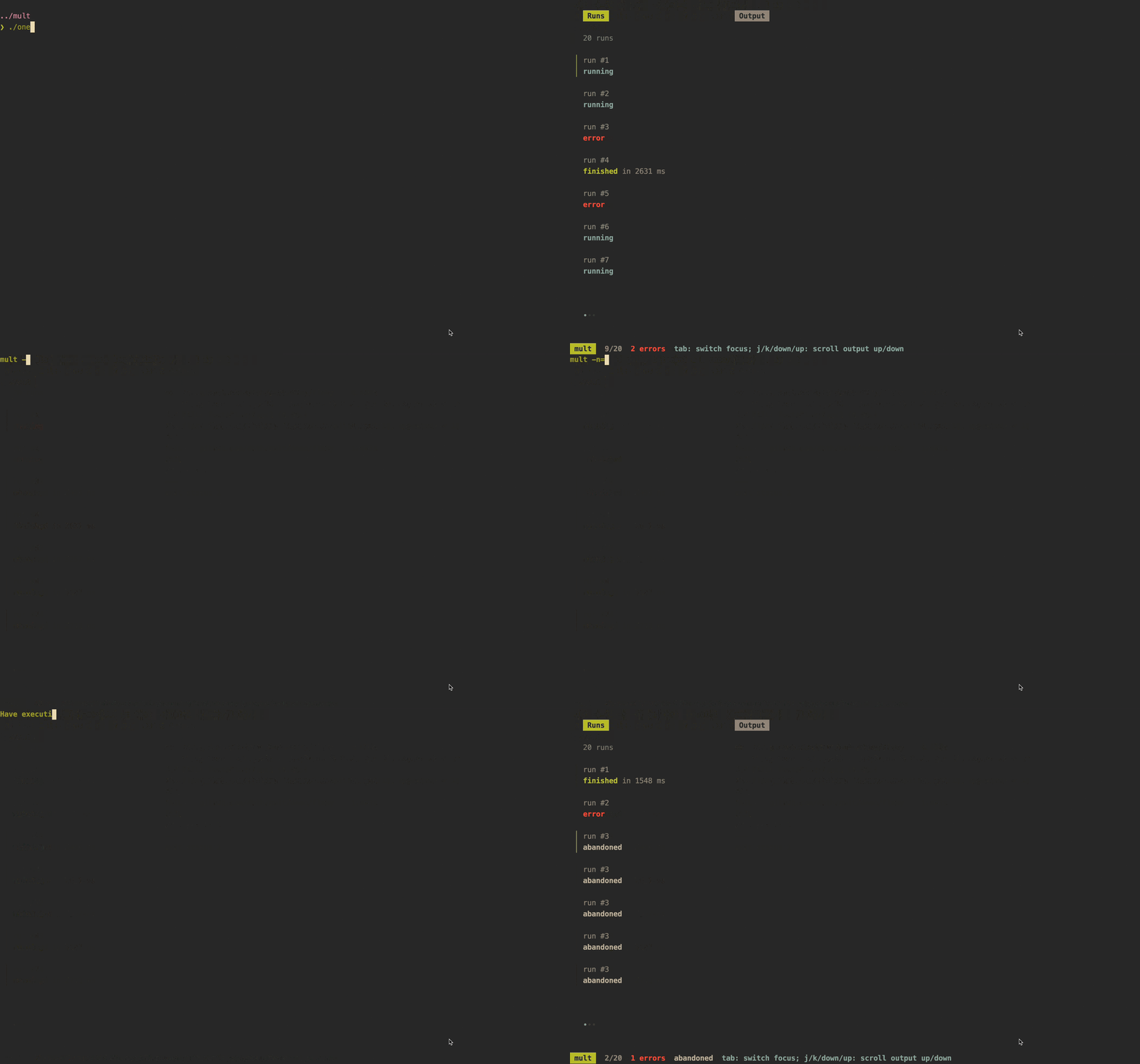
Run a command multiple times and glance at the outputs.
🧰 Use Cases
mult can come in handy in a few scenarios, such as:
- Investigating inconsistent responses from a web server
- Checking the outcomes of a flaky test suite
- Running quick and dirty performance/stress tests
💾 Installation
homebrew:
brew install dhth/tap/mult
go:
go install github.com/dhth/mult@latest
Arch Linux:
yay -S mult
Or get the binaries directly from a release.
⚡️ Usage
Usage: mult [flags]

Flags:
  -F    whether to stop after first failure
  -S    whether to stop after first success
  -d int
        time (in ms) to sleep for between runs
  -i    accept flag values interactively (takes precendence over -n)
  -n int
        number of times to run the command (default 5)
  -s    whether to invoke the command sequentially
Specify number of runs
mult -n=10 yourcommand
Ask for number of runs
mult -i yourcommand
Run sequentially
By default, mult executes all runs concurrently. Use -s for sequentially
execution.
mult -s yourcommand
Add delay (in milliseconds) between runs
mult -s -d=500 yourcommand
Stop at first failure
mult -s -F yourcommand
Stop at first success
mult -s -S yourcommand
Note: -d, -F, -S only apply in sequential run mode.
 Documentation

Documentation


There is no documentation for this package.
 Source Files
 Directories
Click to show internal directories.
Click to hide internal directories.