

 README





simplejsonx
simplejsonx is a generic-based JSON parsing package that depends on github.com/bitly/go-simplejson, enhancing type safety and flexibility in JSON processing. It requires at least Go 1.22 (which supports generics).
CHINESE README
Installation
go get github.com/giftedlunch/simplejsonx
Usage Example
1. Reading and Loading JSON Data
First, use simplejsonx.Load to read and load JSON data.
package main

import (
	"fmt"
	"github.com/giftedlunch/simplejsonx"
	"log"
)

func main() {
	// Sample JSON data
	data := []byte(`{"name": "yyle88", "age": 18, "is_rich": true}`)

	// Load the JSON data
	simpleJson, err := simplejsonx.Load(data)
	if err != nil {
		log.Fatalf("Error loading JSON: %v", err)
	}

	// Extract fields
	name, err := simplejsonx.Extract[string](simpleJson, "name")
	if err != nil {
		log.Fatalf("Error extracting 'name': %v", err)
	}

	age, err := simplejsonx.Extract[int](simpleJson, "age")
	if err != nil {
		log.Fatalf("Error extracting 'age': %v", err)
	}

	isRich, err := simplejsonx.Extract[bool](simpleJson, "is_rich")
	if err != nil {
		log.Fatalf("Error extracting 'is_rich': %v", err)
	}

	// Output the extracted values
	fmt.Println("name:", name, "age:", age, "rich:", isRich)
}
2. Extracting JSON Fields
Use Extract to extract JSON fields and ensure the correct type is returned.
res, err := simplejsonx.Extract[int](simpleJson, "age")
if err != nil {
    log.Fatalf("Error extracting 'age': %v", err)
}
fmt.Println("Age:", res)  // Output: 18
3. Resolving JSON Values
Use the Resolve method to obtain the JSON field data in the specified type.
simpleJson, err := simplejsonx.Load([]byte(`{"height": 175, "weight": 80}`))
if err != nil {
	log.Fatalf("Error loading JSON: %v", err)
}

height, err := simplejsonx.Resolve[int64](simpleJson.Get("height"))
if err != nil {
	log.Fatalf("Error resolving 'height': %v", err)
}

fmt.Println("Height:", height)  // Output: 175
4. Using Inspect to Extract Fields
The Inspect method is similar to Extract, but if the key does not exist, it returns the zero value without causing an error. It only returns an error in the case of invalid arguments or other issues. When using this method, you need to handle the returned zero value and errors correctly.
simpleJson, err := simplejsonx.Load([]byte(`{"name": "yyle88", "age": 18}`))
if err != nil {
	log.Fatalf("Error loading JSON: %v", err)
}

// Use Inspect to extract fields. If the key does not exist, it returns the zero value (e.g., empty string, zero integer).
name, err := simplejsonx.Inspect[string](simpleJson, "name")
if err != nil {
    log.Fatalf("Error inspecting 'name': %v", err)
}
fmt.Println("Name:", name)  // Output: yyle88

// Extract a non-existent field, which returns the zero value (e.g., empty string).
address, err := simplejsonx.Inspect[string](simpleJson, "address")
if err != nil {
    log.Fatalf("Error inspecting 'address': %v", err)
}
fmt.Println("Address:", address)  // Output: Empty string (zero value)
License
simplejsonx is open-source and released under the MIT License. See the LICENSE file for more information.
Support
Welcome to contribute to this project by submitting pull requests or reporting issues.
If you find this package helpful, give it a star on GitHub!
Thank you for your support!
Happy Coding with simplejsonx! 🎉
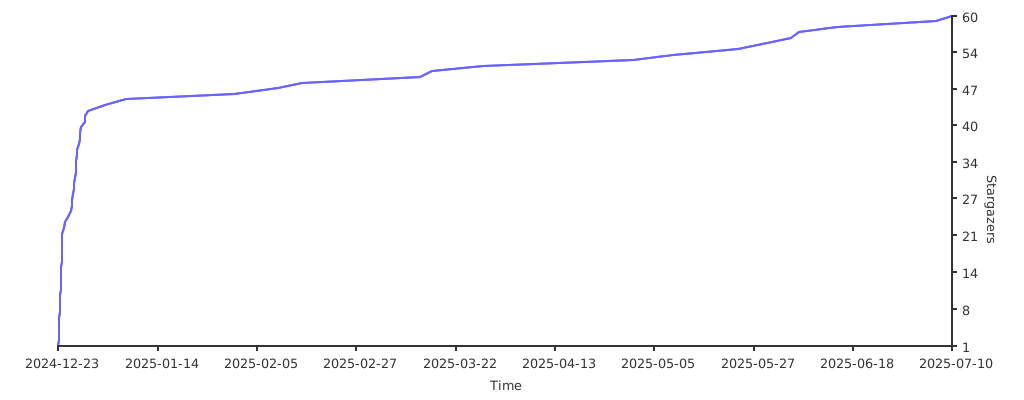
Give me stars. Thank you!!!
Starring
 Documentation

Index 
- func Extract[T any](simpleJson *simplejson.Json, key string) (T, error)
- func GetList(simpleJson *simplejson.Json, key string) (simpleJsons []*simplejson.Json, err error)
- func Inspect[T any](simpleJson *simplejson.Json, key string) (T, error)
- func List(elements []interface{}) (simpleJsons []*simplejson.Json)
- func Load(data []byte) (simpleJson *simplejson.Json, err error)
- func Resolve[T any](simpleJson *simplejson.Json) (T, error)
- func Wrap(value interface{}) (simpleJson *simplejson.Json)
Constants 
This section is empty.
Variables 
This section is empty.
Functions 
func Extract 
func Extract[T any](simpleJson *simplejson.Json, key string) (T, error)
Extract retrieves the value associated with the given key in the JSON object.
func GetList 
func GetList(simpleJson *simplejson.Json, key string) (simpleJsons []*simplejson.Json, err error)
GetList retrieves a slice of simplejson.Json objects from the key's list (a[key]).
func Inspect 
func Inspect[T any](simpleJson *simplejson.Json, key string) (T, error)
Inspect retrieves the value of the given key if it exists in the JSON object, returning the zero value if the key is missing.
func List 
func List(elements []interface{}) (simpleJsons []*simplejson.Json)
List converts a slice of items into a slice of simplejson.Json objects.
func Load 
func Load(data []byte) (simpleJson *simplejson.Json, err error)
Load creates a simplejson.Json instance from bytes, same as simplejson.NewJson(data).
func Wrap 
func Wrap(value interface{}) (simpleJson *simplejson.Json)
Wrap creates a simplejson.Json instance with the provided value as the root element.
Types 
This section is empty.
 Source Files
 Directories