

 README

README

Okapi Example
A simple example demonstrating the Okapi API Framework
Okapi is a modern, minimalist HTTP web framework for Go, inspired by FastAPI's elegance. Designed for simplicity, performance, and developer happiness, it helps you build fast, scalable, and well-documented APIs with minimal boilerplate.
Prerequisites
- Go installed
- Git installed
Features
- Basic Okapi implementation example
- Okapi middlewares
- Okapi Route Definition
- Ready-to-run code structure
Getting Started
Clone the Repository
git clone https://github.com/jkaninda/okapi-example
cd okapi-example
Install Dependencies
go mod tidy
Run the Application
go run .
Using Docker
docker run --rm --name okapi-example -p 8080:8080 jkaninda/okapi-example
Use JWT_SIGNING_SECRET environment variable if you want to change JWT secret, default: supersecret
Visit http://localhost:8080 to see the response:
{"message": "Welcome to the Okapi Web Framework!"}
Visit http://localhost:8080/docs/ to see the documentation
Project Structure
.
├── main.go          # Main application file
├── middlewares      # Middlewares package
├── controllers      # Controllers package
├── routes           # Routes package
├── models           # Models package
└── README.md        # Project documentation
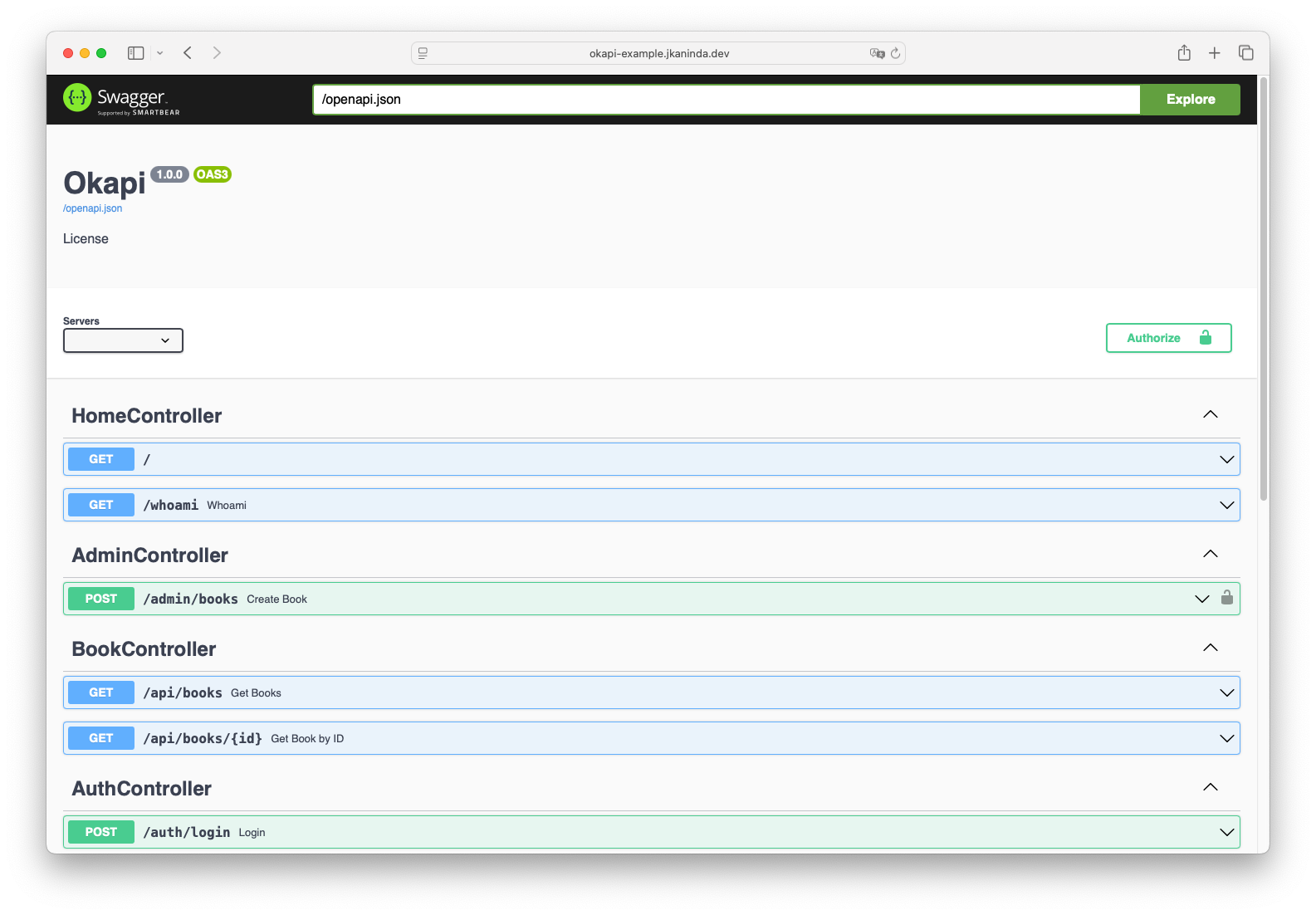
Swagger UI Preview
Okapi automatically generates Swagger UI for all routes:
License
MIT - Feel free to use and modify this example.
 Documentation

Documentation


There is no documentation for this package.
 Source Files
 Directories
Click to show internal directories.
Click to hide internal directories.