

 README

README

Portainer agent
Purpose
The Portainer Agent is a workaround for a Docker API limitation when using the Docker API to manage a Docker environment. The user interactions with specific resources (containers, networks, volumes and images) are limited to those available on the node targeted by the Docker API request.
Docker Swarm mode introduces a concept which is the clustering of Docker nodes. It also adds services, tasks, configs and secrets which are cluster-aware resources. Cluster-aware means that you can query for a list of services or inspect a task inside any node on the cluster, as long as you’re executing the Docker API request on a manager node.
Containers, networks, volumes and images are node specific resources, not cluster-aware. When you, for example, want to list all the volumes available on a node inside your cluster, you will need to send a query to that specific node.
The purpose of the agent aims to allows previously node specific resources to be cluster-aware, all while keeping the Docker API request format. As aforementioned, this means that you only need to execute one Docker API request to retrieve all these resources from every node inside the cluster. In all bringing a better Docker user experience when managing Swarm clusters.
Security
Here at Portainer, we believe in responsible disclosure of security issues. If you have found a security issue, please report it to security@portainer.io.
Technical details
The Portainer agent is basically a cluster of Docker API proxies. Deployed inside a Swarm cluster on each node, it allows the redirection (proxy) of a Docker API request on any specific node as well as the aggregration of the response of multiple nodes.
At startup, the agent will communicate with the Docker node it is deployed on via the Unix socket/Windows named pipe to retrieve information about the node (name, IP address, role in the Swarm cluster). This data will be shared when the agent will register into the agent cluster.
Agent cluster
This implementation is using serf to form a cluster over a network, each agent requires an address where it will advertise its ability to be part of a cluster and a join address where it will be able to reach other agents.
The agent retrieves the IP address it can use to create a cluster by inspecting the Docker networks associated to the agent container. If multiple networks are available, it will pickup the first network available and retrieve the IP address inside this network.
Note: Be careful when deploying the agent to not deploy it inside the Swarm ingress network (by not using mode=host when exposing ports). This could lead to the agent being unable to create a cluster correctly, if picking the IP address inside the ingress network.
Proxy
The agent works as a proxy to the Docker API on which it is deployed as well as a proxy to the other agents inside the cluster.
In order to proxy the request to the other agents inside the cluster, it introduces a header called X-PortainerAgent-Target which can have
the name of any node in the cluster as a value. When this header is specified, the Portainer agent receiving the request will extract its value, retrieve the address of the agent located on the node specified using this header value and proxy the request to it.
If no header X-PortainerAgent-Target is present, we assume that the agent receiving the request is the target of the request and it will
be proxied to the local Docker API.
Some requests are specifically marked to be executed against a manager node inside the cluster (/services/**, /tasks/**, /nodes/**, etc... e.g. all the Docker API operations that can only be executed on a Swarm manager node). This means that you can execute these requests
against any agent in the cluster and they will be proxied to an agent (and to the associated Docker API) located on a Swarm manager node.
Proxy & aggregation
By default, the agent will inspect any requests and search for the X-PortainerAgent-ManagerOperation header. If it is found (the value of the header does not matter),
then the agent will proxy that request to an agent located on any manager node. If this header is not found, then an operation will be executed based on the endpoint prefix (/networks for a cluster operation, /services for a manager operation, etc...).
The X-PortainerAgent-ManagerOperation header was introduced to work-around the fact that a Portainer instance uses the Docker CLI binary to manage stacks and the binary
MUST always target a manager node when executing any command.
Some requests are specifically marked to be executed against the whole cluster:
GET /containers/jsonGET /images/jsonGET /volumesGET /networks
The agent handles these requests using the same header mechanism. If no X-PortainerAgent-Target is found, it will automatically execute
the request against each node in the cluster in a concurrent way. Behind the scene, it retrieves the IP address of each node, create a copy of the request, decorate each request with the X-PortainerAgent-Target header and aggregate the response of each request into a single one (reproducing the Docker API response format).
Docker API compliance
When communicating with a Portainer agent instead of using the Docker API directly, the only difference is the possibility to add the X-PortainerAgent-Target header to each request to be able to execute some actions against a specific node in the cluster.
The fact that the agent final proxy target is always the Docker API means that we keep the Docker original response format. The only difference in the response is that the agent will automatically add the Portainer-Agent header to each response using the version of the Portainer agent as value.
Agent specific API
The agent also exposes the following endpoints:
/agents(GET): List all the available agents in the cluster/browse/ls(GET): List the files available under a specific path on the filesystem/browse/get(GET): Retrieve a file available under a specific path on the filesytem/browse/delete(DELETE): Delete an existing file under a specific path on the filesytem/browse/rename(PUT): Rename an existing file under a specific path on the filesytem/browse/put(POST): Upload a file under a specific path on the filesytem/host/info(GET): Get information about the underlying host system/ping(GET): Returns a 204. Public endpoint that do not require any form of authentication/key(GET): Returns the Edge key associated to the agent only available when agent is started in Edge mode/key(POST): Set the Edge key on this agent only available when agent is started in Edge mode/websocket/attach(GET): Websocket attach endpoint (for container console usage)/websocket/exec(GET): Websocket exec endpoint (for container console usage)
Note: The /browse/* endpoints can be used to manage a filesystem. By default, it allows manipulation of files in Docker volumes (available under /var/run/docker/volumes when bind-mounted in the agent container) but can also manipulate files anywhere on the filesystem.
Agent API version
The agent API version is exposed via the Portainer-Agent-API-Version in each response of the agent.
Using the agent in Edge mode
The following information is only relevant for an Agent that was started in Edge mode.
Purpose
The Edge mode is mainly used in the case of your remote environment being not in the same network as your Portainer instance. When started in Edge mode, the agent will reach out to the Portainer instance and will take care of creating a reverse tunnel allowing the Portainer instance to query it. It uses a token (Edge key) that contains the required information to connect to a specific Portainer instance.
Startup
To start an agent in Edge mode, the EDGE=1 environment variable must be set.
Upon startup, the agent will try to retrieve an existing Edge key in the following order:
- from the environment variables via the
EDGE_KEYenvironment variable - from the filesystem (see the Edge key section below for more information about key persistence on disk)
- from the cluster (if joining an existing Edge agent cluster)
If no Edge key was retrieved, the agent will start a HTTP server where it will expose a UI to associate an Edge key. After associating a key via the UI, the UI server will shutdown.
For security reasons, the Edge server UI will shutdown after 15 minutes if no key has been specified. The agent will require a restart in order to access the Edge UI again.
Edge key
The Edge key is used by the agent to connect to a specific Portainer instance. It is encoded using base64 format (without the padding characters) and contains the following information:
- Portainer instance API URL
- Portainer instance tunnel server address
- Portainer instance tunnel server fingerprint
- Endpoint identifier
This information is represented in the following format before encoding (single string using the | character as a separator):
portainer_instance_url|tunnel_server_addr|tunnel_server_fingerprint|endpoint_ID
The Edge key associated to an agent will be persisted on disk after association under /data/agent_edge_key.
Polling
After associating an Edge key to an agent, the agent will start polling the associated Portainer instance.
It will use the Portainer instance API URL and the endpoint identifier available in the Edge key to build the poll request URL: http(s)://API_URL/api/endpoints/ENDPOINT_ID/status
The response of the poll request contains the following information:
- Tunnel status
- Poll frequency
- Tunnel port
- Encrypted credentials
- Schedules
The tunnel status property can take one of the following values: IDLE, REQUIRED, ACTIVE. When this property is set to REQUIRED, the agent will
create a reverse tunnel to the Portainer instance using the port specified in the response as well as the credentials.
Each poll request sent to the Portainer instance contains the X-PortainerAgent-EdgeID header (with the value set to the Edge ID associated to the agent). This is used by the Portainer instance to associate an Edge ID to an endpoint so that an agent won't be able to poll information and join an Edge cluster by re-using an existing key without knowing the Edge ID.
To allow for pre-staged environments, this Edge ID is associated to an endpoint by Portainer after receiving the first poll request from an agent.
Reverse tunnel
The reverse tunnel is established by the agent. The permissions associated to the credentials are set on the Portainer instance, the credentials are valid for a management session and can only be used to create a reverse tunnel on a specific port (the one that is specified in the poll response).
The agent will monitor the usage of the tunnel. The tunnel will be closed in any of the following cases:
- The status of the tunnel specified in the poll response is equal to
IDLE - If no activity has been registered on the tunnel (no requests executed against the agent API) after a specific amount of time (can be configured via
EDGE_INACTIVITY_TIMEOUT, default to 5 minutes)
API server
When deployed in Edge mode, the agent API is not exposed over HTTPS anymore (see Using the agent non Edge section below) because we're using SSH to setup an encrypted tunnel. In order to avoid potential security issues with agent deployment exposing the API port on their host, the agent won't expose the API server under 0.0.0.0. Instead, it will expose the API server on the same IP address that is used to advertise the cluster (usually, the container IP in the overlay network).
This means that only a container deployed in the same overlay network as the agent will be able to query it.
Using the agent (non Edge)
The following information is only relevant for an Agent that was not started in Edge mode.
Encryption
By default, an agent will automatically generate its own set of TLS certificate and key. It will then use these to start the web server where the agent API is exposed. By using self-signed certificates, each agent client and proxy will skip the TLS server verification when executing a request against another agent.
Authentication
Each request to an agent must include a digital signature in the X-PortainerAgent-Signature header encoded using the base64 format (without the padding characters).
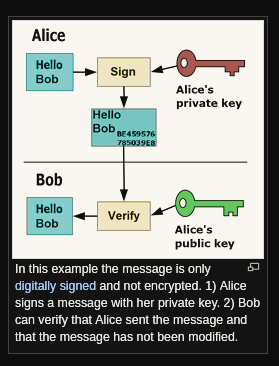
The following protocol is used between a Portainer instance and an agent:
For each HTTP request made from the Portainer instance to the agent:
- The Portainer instance generates a signature using its private key. It encodes this signature in
base64format (without the padding characters) and add it to theX-PortainerAgent-Signatureheader of the request - The Portainer instance encodes its public key in hexadecimal and adds it the
X-PortainerAgent-PublicKeyheader of the request
For each HTTP request received from the agent:
- The agent will check that the
X-PortainerAgent-PublicKeyandX-PortainerAgent-Signatureheaders are available in the request otherwise it returns a 403 - The agent will then trigger the signature verification process. If the signature is not valid it returns a 403
Signature verification
The signature verification process can follow two different paths based on how the agent was deployed.
By default, the agent will wait for a valid request from a Portainer instance and automatically associate the first Portainer instance that communicates with it by registering the public key found in the X-PortainerAgent-PublicKey header inside memory.
During the association process, the agent will first decode the specified public key from hexadecimal and then parse the public key. Only if these steps are successfull then the key will be associated to the agent.
Once a Portainer instance is registered by the agent, the agent will not try to decode/parse the public key associated to a request anymore and will assume that only signatures associated to this public key are authorized (preventing any other Portainer instance to communicate with this agent).
Finally, the agent uses the associated public key and a default message that is known by both entities to verify the signature available in the X-PortainerAgent-Signature header.
When the AGENT_SECRET environment variable is set in the execution context of the agent (-e AGENT_SECRET=mysecret when started as a container for example), the digital signature verification process will be slightly different.
In secret mode, the agent will not register a Portainer public key in memory anymore. Instead, it will ALWAYS decode and parse the public key available in the X-PortainerAgent-PublicKey and will then trigger the signature verification using key.
The signature verification is slightly altered as well, it now uses the public key sent in the request to verify the signature as well as the secret specified at startup in the AGENT_SECRET environment variable.
This mode will allow multiple instances of Portainer to connect to a single agent.
Note: Due to the fact that the agent will now decode and parse the public key associated to each request, this mode might be less performant than the default mode.
Deployment options
The behavior of the agent can be tuned via a set of mandatory and optional options available as environment variables:
- AGENT_CLUSTER_ADDR (mandatory): address (in the IP:PORT format) of an existing agent to join the agent cluster. When deploying the agent as a Docker Swarm service,
we can leverage the internal Docker DNS to automatically join existing agents or form a cluster by using
tasks.<AGENT_SERVICE_NAME>:<AGENT_PORT>as the address. - AGENT_HOST (optional): address on which the agent API will be exposed (default to
0.0.0.0) - AGENT_PORT (optional): port on which the agent API will be exposed (default to
9001) - AGENT_SECRET (optional): shared secret used in the signature verification process
- LOG_LEVEL (optional): defines the log output verbosity (default to
INFO) - EDGE (optional): enable Edge mode. Disabled by default, set to
1to enable it - EDGE_KEY (optional): specify an Edge key to use at startup
- EDGE_ID (mandatory when EDGE=1): a unique identifier associated to this agent cluster
- EDGE_SERVER_HOST (optional): address on which the Edge UI will be exposed (default to
0.0.0.0) - EDGE_SERVER_PORT (optional): port on which the Edge UI will be exposed (default to
80). - EDGE_INACTIVITY_TIMEOUT (optional): timeout used by the agent to close the reverse tunnel after inactivity (default to
5m) - EDGE_INSECURE_POLL (optional): enable this option if you need the agent to poll a HTTPS Portainer instance with self-signed certificates. Disabled by default, set to
1to enable it
For more information about deployment scenarios, see: https://portainer.readthedocs.io/en/stable/agent.html
Development
- Install go >= 1.11.2
- Install dep: https://golang.github.io/dep/docs/installation.html
If you want to add any extra dependency:
dep ensure -add github.com/foo/bar
3. Run
- A local agent container:
./dev.sh local
- The agent container inside a Swarm cluster (requires https://github.com/deviantony/vagrant-swarm-cluster)
./dev.sh swarm
- The dev script has more commands, you can see them by running
./dev.sh
 Documentation

Documentation

Index 
- Constants
- type ClusterMember
- type ClusterService
- type ContainerPlatform
- type DigitalSignatureService
- type DockerEngineStatus
- type DockerInfoService
- type DockerNodeRole
- type DockerRuntimeConfiguration
- type DockerStackService
- type EdgeStackConfig
- type HostInfo
- type KubernetesDeployer
- type KubernetesInfoService
- type KubernetesRuntimeConfiguration
- type Metadata
- type OptionParser
- type Options
- type PciDevice
- type PhysicalDisk
- type ReverseTunnelClient
- type RuntimeConfiguration
- type Schedule
- type Scheduler
- type SystemService
- type TLSService
- type TunnelConfig
Constants 
const (
	// Version represents the version of the agent.
	Version = "2.7.0"
	// APIVersion represents the version of the agent's API.
	APIVersion = "2"
	// DefaultAgentAddr is the default address used by the Agent API server.
	DefaultAgentAddr = "0.0.0.0"
	// DefaultAgentPort is the default port exposed by the Agent API server.
	DefaultAgentPort = "9001"
	// DefaultLogLevel is the default logging level.
	DefaultLogLevel = "INFO"
	// DefaultEdgeSecurityShutdown is the default time after which the Edge server will shutdown if no key is specified
	DefaultEdgeSecurityShutdown = 15
	// DefaultEdgeServerAddr is the default address used by the Edge server.
	DefaultEdgeServerAddr = "0.0.0.0"
	// DefaultEdgeServerPort is the default port exposed by the Edge server.
	DefaultEdgeServerPort = "80"
	// DefaultEdgePollInterval is the default interval used to poll Edge information from a Portainer instance.
	DefaultEdgePollInterval = "5s"
	// DefaultEdgeSleepInterval is the default interval after which the agent will close the tunnel if no activity.
	DefaultEdgeSleepInterval = "5m"
	// DefaultConfigCheckInterval is the default interval used to check if node config changed
	DefaultConfigCheckInterval = "5s"
	// SupportedDockerAPIVersion is the minimum Docker API version supported by the agent.
	SupportedDockerAPIVersion = "1.24"
	// HTTPTargetHeaderName is the name of the header used to specify a target node.
	HTTPTargetHeaderName = "X-PortainerAgent-Target"
	// HTTPEdgeIdentifierHeaderName is the name of the header used to specify the Docker identifier associated to
	// an Edge agent.
	HTTPEdgeIdentifierHeaderName = "X-PortainerAgent-EdgeID"
	// HTTPManagerOperationHeaderName is the name of the header used to specify that
	// a request must target a manager node.
	HTTPManagerOperationHeaderName = "X-PortainerAgent-ManagerOperation"
	// HTTPSignatureHeaderName is the name of the header containing the digital signature
	// of a Portainer instance.
	HTTPSignatureHeaderName = "X-PortainerAgent-Signature"
	// HTTPPublicKeyHeaderName is the name of the header containing the public key
	// of a Portainer instance.
	HTTPPublicKeyHeaderName = "X-PortainerAgent-PublicKey"
	// HTTPResponseAgentHeaderName is the name of the header that is automatically added
	// to each agent response.
	HTTPResponseAgentHeaderName = "Portainer-Agent"
	// HTTPKubernetesSATokenHeaderName represent the name of the header containing a Kubernetes SA token
	HTTPKubernetesSATokenHeaderName = "X-PortainerAgent-SA-Token"
	// HTTPResponseAgentApiVersion is the name of the header that will have the
	// Portainer Agent API Version.
	HTTPResponseAgentApiVersion = "Portainer-Agent-API-Version"
	// HTTPResponseAgentPlatform is the name of the header that will have the Portainer agent platform
	HTTPResponseAgentPlatform = "Portainer-Agent-Platform"
	// PortainerAgentSignatureMessage is the unhashed content that is signed by the Portainer instance.
	// It is used by the agent during the signature verification process.
	PortainerAgentSignatureMessage = "Portainer-App"
	// ResponseMetadataKey is the JSON field used to store any Portainer related information in
	// response objects.
	ResponseMetadataKey = "Portainer"
	// TLSCertPath is the default path to the TLS certificate file.
	TLSCertPath = "cert.pem"
	// TLSKeyPath is the default path to the TLS key file.
	TLSKeyPath = "key.pem"
	// HostRoot is the folder mapping to the underlying host filesystem that is mounted inside the container.
	HostRoot = "/host"
	// DataDirectory is the folder where the data associated to the agent is persisted.
	DataDirectory = "/data"
	// ScheduleScriptDirectory is the folder where schedules are saved on the host
	ScheduleScriptDirectory = "/opt/portainer/scripts"
	// EdgeKeyFile is the name of the file used to persist the Edge key associated to the agent.
	EdgeKeyFile = "agent_edge_key"
	// DockerBinaryPath is the path of the docker binary
	DockerBinaryPath = "/app"
	// EdgeStackFilesPath is the path where edge stack files are saved
	EdgeStackFilesPath = "/tmp/edge_stacks"
	// EdgeStackQueueSleepInterval is the interval used to check if there's an Edge stack to deploy
	EdgeStackQueueSleepInterval = "5s"
	// KubernetesServiceHost is the environment variable name of the kubernetes API server host
	KubernetesServiceHost = "KUBERNETES_SERVICE_HOST"
	// KubernetesServicePortHttps is the environment variable of the kubernetes API server https port
	KubernetesServicePortHttps = "KUBERNETES_SERVICE_PORT_HTTPS"
)
Variables 
This section is empty.
Functions 
This section is empty.
Types 
type ClusterMember 
type ClusterMember struct {
	IPAddress  string
	Port       string
	NodeName   string
	NodeRole   string
	EdgeKeySet bool
}
ClusterMember is the representation of an agent inside a cluster.
type ClusterService 
type ClusterService interface {
	Create(advertiseAddr string, joinAddr []string) error
	Members() []ClusterMember
	Leave()
	GetMemberByRole(role DockerNodeRole) *ClusterMember
	GetMemberByNodeName(nodeName string) *ClusterMember
	GetMemberWithEdgeKeySet() *ClusterMember
	GetRuntimeConfiguration() *RuntimeConfiguration
	UpdateRuntimeConfiguration(runtimeConfiguration *RuntimeConfiguration) error
}
ClusterService is used to manage a cluster of agents.
type ContainerPlatform 
type ContainerPlatform int
ContainerPlatform represent the platform on which the agent is running (Docker, Kubernetes)
const (

	// PlatformDocker represent the Docker platform (Standalone/Swarm)
	PlatformDocker ContainerPlatform
	// PlatformKubernetes represent the Kubernetes platform
	PlatformKubernetes
	// PlatformPodman represent the Podman platform (Standalone)
	PlatformPodman
)
type DigitalSignatureService 
DigitalSignatureService is used to validate digital signatures.
type DockerEngineStatus 
type DockerEngineStatus int
DockerEngineStatus represent the status of a Docker runtime (standalone or swarm)
const (

	// EngineStatusStandalone represent a standalone Docker environment
	EngineStatusStandalone DockerEngineStatus
	// EngineStatusSwarm represent a Docker swarm environment
	EngineStatusSwarm
)
type DockerInfoService 
type DockerInfoService interface {
	GetRuntimeConfigurationFromDockerEngine() (*RuntimeConfiguration, error)
	GetContainerIpFromDockerEngine(containerName string, ignoreNonSwarmNetworks bool) (string, error)
	GetServiceNameFromDockerEngine(containerName string) (string, error)
}
DockerInfoService is used to retrieve information from a Docker environment.
type DockerNodeRole 
type DockerNodeRole int
DockerNodeRole represent the role of a Docker swarm node
const (

	// NodeRoleManager represent a Docker swarm manager node role
	NodeRoleManager DockerNodeRole
	// NodeRoleWorker represent a Docker swarm worker node role
	NodeRoleWorker
)
type DockerRuntimeConfiguration 
type DockerRuntimeConfiguration struct {
	EngineStatus DockerEngineStatus
	Leader       bool
	NodeRole     DockerNodeRole
}
DockerRuntimeConfiguration represents the runtime configuration of an agent running on the Docker platform
type DockerStackService 
type DockerStackService interface {
	Login() error
	Logout() error
	Deploy(name, stackFileContent string, prune bool) error
	Remove(name string) error
}
DockerStackService is a service used to deploy and remove Docker stacks
type EdgeStackConfig 
EdgeStackConfig represent an Edge stack config
type HostInfo 
type HostInfo struct {
	PCIDevices    []PciDevice
	PhysicalDisks []PhysicalDisk
}
HostInfo is the representation of the collection of host information
type KubernetesDeployer 
KubernetesDeployer represents a service to deploy a manifest inside a Kubernetes endpoint
type KubernetesInfoService 
type KubernetesInfoService interface {
	GetInformationFromKubernetesCluster() (*RuntimeConfiguration, error)
}
KubernetesInfoService is used to retrieve information from a Kubernetes environment.
type KubernetesRuntimeConfiguration 
type KubernetesRuntimeConfiguration struct{}
KubernetesRuntimeConfiguration represents the runtime configuration of an agent running on the Kubernetes platform
type Metadata 
type Metadata struct {
	Agent struct {
		NodeName string `json:"NodeName"`
	} `json:"Agent"`
}
AgentMetadata is the representation of the metadata object used to decorate all the objects in the response of a Docker aggregated resource request.
type OptionParser 
OptionParser is used to parse options.
type Options 
type Options struct {
AgentServerAddr string
AgentServerPort string
ClusterAddress string
HostManagementEnabled bool
EdgeMode bool
EdgeKey string
EdgeID string
EdgeServerAddr string
EdgeServerPort string
EdgeInactivityTimeout string
EdgeInsecurePoll bool
LogLevel string
}
Options are the options used to start an agent.
type PhysicalDisk 
PhysicalDisk is the representation of a physical disk on a host
type ReverseTunnelClient 
type ReverseTunnelClient interface {
	CreateTunnel(config TunnelConfig) error
	CloseTunnel() error
	IsTunnelOpen() bool
}
ReverseTunnelClient is used to create a reverse proxy tunnel when the agent is started in Edge mode.
type RuntimeConfiguration 
type RuntimeConfiguration struct {
	AgentPort               string
	EdgeKeySet              bool
	NodeName                string
	DockerConfiguration     DockerRuntimeConfiguration
	KubernetesConfiguration KubernetesRuntimeConfiguration
}
RuntimeConfiguration represent the configuration of an agent during runtime
type SystemService 
type SystemService interface {
	GetDiskInfo() ([]PhysicalDisk, error)
	GetPciDevices() ([]PciDevice, error)
}
SystemService is used to get info about the host
type TLSService 
TLSService is used to create TLS certificates to use enable HTTPS.
 Source Files
 Directories