

 README

Makroud


A high level SQL Connector.
Introduction
Makroud is a high level SQL Connector that only support PostgreSQL at the moment.
It's an advanced mapper and/or a lightweight ORM that relies on reflection to generate queries. Using reflection has its flaws, type safety is not guaranteed and a panic is still possible, even if you are very careful and vigilant. However, development is super easy and straightforward since it doesn't rely on code generation.
Makroud isn't a migration tool and it doesn't inspect the database to define the application data model (since there is no code generation). It's really important to have Active Record that are synchronized with your data model in your database.
It also support simple associations (one, many) with preloading.
Under the hood, it relies on three components:
Installation
Using dep
dep ensure -add github.com/ulule/makroud@master
or go get
go get -u github.com/ulule/makroud
Usage
Create a Driver
A Driver is a high level abstraction of a database connection or a transaction.
It's almost required everytime alongside a context.Context to manipulate rows.
driver, err := makroud.New(
	makroud.Host(cfg.Host),
	makroud.Port(cfg.Port),
	makroud.User(cfg.User),
	makroud.Password(cfg.Password),
	makroud.Database(cfg.Name),
	makroud.SSLMode(cfg.SSLMode),
	makroud.MaxOpenConnections(cfg.MaxOpenConnections),
	makroud.MaxIdleConnections(cfg.MaxIdleConnections),
)
Also, you can use a struct directly if you don't need to use functional options:
driver, err := makroud.NewWithOptions(&makroud.ClientOptions{
	Host:               cfg.Host,
	Port:               cfg.Port,
	User:               cfg.User,
	Password:           cfg.Password,
	Database:           cfg.Name,
	SSLMode:            cfg.SSLMode,
	MaxOpenConnections: cfg.MaxOpenConnections,
	MaxIdleConnections: cfg.MaxIdleConnections,
})
Define a Model
With the Active Record approach, you have to define a model that wraps your database table (or view) columns into properties.
Models are structs that contain basic go types, pointers, sql.Scanner, driver.Valuer or Model interface.
All the fields of this struct will be columns in the database table.
An example
type User struct {
	// Columns
	ID        string `makroud:"column:id,pk:ulid"`
	Email     string `makroud:"column:email"`
	Password  string `makroud:"column:password"`
	Country   string `makroud:"column:country"`
	Locale    string `makroud:"column:locale"`
	ProfileID string `makroud:"column:profile_id,fk:profiles"`
	// Relationships
	Roles    []Role    `makroud:"relation:roles.user_id"`
	Profile  *Profile  `makroud:"relation:profile_id"`
}

func (User) TableName() string {
	return "users"
}
What does it means ?
First of all, you have to define a TableName method that returns the database table name (or view).
Without that information, makroud cannot uses that struct as a Model.
Then, you have to define your model columns using struct tags:
- column(
string): Define column name. - pk(
bool|string): Define column as a primary key, it accepts the following argument: - default(
bool): On insert, if model has a zero value, it will use the db default value. - fk(
string): Define column as a foreign key, reference table must be provided. - relation(
string): Define which column to use for preload. The column must be prefixed by the table name if it's not the model table name (However, the prefix is optional if the table name is the same as the model). See Preload section for further information. - -(
bool): Ignore this field.
NOTE: Tags of type
boolcan be set askey:trueor justkeyfor implicittrue.
NOTE: Tags must be separated by a comma (
tagA, tagB, tagC).
Keep in mind that a model requires one primary key (and just one). It's a known limitation that only one primary key can be specified and it can't be a composite key.
After that, you can define optional relationships (or associations) that can be preloaded later. The preload mechanism, which enables you to fetch relationships from database, support these types:
Model*Model[]Model[]*Model*[]Model*[]*Model
Conventions
By default, if the pk tag is undefined, makroud will use the field named ID as primary key with
this configuration: pk:db
type User struct {
	ID   string `makroud:"column:id"`   // Field named ID will be used as a primary key by default.
	Name string `makroud:"column:name"`
}
By default, if the column tag is undefined, makroud will transform field name to lower snake case as column name.
type User struct {
	ID   string `makroud:"pk"` // Column name is `id`
	Name string `makroud:""`   // Column name is `name`
}
By default, if the relation tag is undefined, makroud will infer the column name to use for the preload mechanism.
Local foreign key:
Let's define a user with a profile:
type User struct {
	ID       string  `makroud:"column:id,pk"`
	Email    string  `makroud:"column:email"`
	PID      string  `makroud:"column:profile_id,fk:profiles"`
	Profile  *Profile
}

func (User) TableName() string {
	return "users"
}

type Profile struct {
	ID         string  `makroud:"column:id,pk:ulid"`
	FirstName  string  `makroud:"column:first_name"`
	LastName   string  `makroud:"column:last_name"`
	Enabled    bool    `makroud:"column:enabled"`
}

func (Profile) TableName() string {
	return "profiles"
}
Since the field Profile in the User has no relation tag, makroud will try to find, in the first pass,
the field with the name ProfileID (FieldName + ID) in User model.
It's mandatory that this field is also a foreign key to the profiles table.
Unfortunately for us, User model has no such field. So, makroud will try to find, in the second and final pass,
the first field that is a foreign key to the profiles table. In our example, it will use the field PID.
Remote foreign key:
Let's define a user with a profile:
type User struct {
	ID       string  `makroud:"column:id,pk"`
	Email    string  `makroud:"column:email"`
	Profile  *Profile
}

func (User) TableName() string {
	return "users"
}

type Profile struct {
	ID         string  `makroud:"column:id,pk:ulid"`
	FirstName  string  `makroud:"column:first_name"`
	LastName   string  `makroud:"column:last_name"`
	Enabled    bool    `makroud:"column:enabled"`
	UID        string  `makroud:"column:user_id,fk:users"`
}

func (Profile) TableName() string {
	return "profiles"
}
Since the field Profile in the User has no relation tag, makroud will try to find, in the first pass,
the field with the name UserID (ModelName + ID) in Profile model.
It's mandatory that this field is also a foreign key to the users table.
Unfortunately for us, Profile model has no such field. So, makroud will try to find, in the second and final pass,
the first field that is a foreign key to the users table. In our example, it will use the field UID.
For models having a CreatedAt field, it will be set to current time when the record is first created.
type User struct {
	ID        string    `makroud:"column:id,pk"`
	Name      string    `makroud:"column:name"`
	CreatedAt time.Time `makroud:"column:created_at"`
}
You can override the default field name and/or column name by adding this method:
func (User) CreatedKey() string {
	return "created"
}
For models having a UpdatedAt field, it will be set to current time when records are updated.
type User struct {
	ID        string    `makroud:"column:id,pk"`
	Name      string    `makroud:"column:name"`
	UpdatedAt time.Time `makroud:"column:updated_at"`
}
You can override the default field name and/or column name by adding this method:
func (User) UpdatedKey() string {
	return "updated"
}
For models having a DeletedAt field, it will be set to current time when records are archived.
type User struct {
	ID        string      `makroud:"column:id,pk"`
	Name      string      `makroud:"column:name"`
	DeletedAt pq.NullTime `makroud:"column:deleted_at"`
}
You can override the default field name and/or column name by adding this method:
func (User) DeletedKey() string {
	return "deleted"
}
Operations
For the following sections, we assume that you have a context.Context and a makroud.Driver instance.
Insert
For a simple insert, you can use save a model like this:
func CreateUser(ctx context.Context, driver makroud.Driver, name string) (*User, error) {
	user := &User{
		Name: name,
	}

	err := makroud.Save(ctx, driver, user)
	if err != nil {
		return nil, err
	}

	return user, nil
}
Or for more complex statements, use a Loukoum InsertBuilder alongside the model.
import "github.com/ulule/loukoum"

func CreateUser(ctx context.Context, driver makroud.Driver, name string) (*User, error) {
	user := &User{
		Name: name,
	}

	stmt := loukoum.Insert("users").
		Set(loukoum.Pair("name", user.Name)).
		Returning("id, created_at, updated_at")

	err := makroud.Exec(ctx, driver, stmt, user)
	if err != nil {
		return nil, err
	}

	return user, nil
}
Update
For a simple update, asumming your model have a primary key defined, you can save it by executing:
func UpdateUser(ctx context.Context, driver makroud.Driver, user *User, name string) error {
	user.Name = name
	return makroud.Save(ctx, driver, user)
}
Or for more complex statements, use a Loukoum UpdateBuilder alongside the model.
import "github.com/ulule/loukoum/v3"

func UpdateUser(ctx context.Context, driver makroud.Driver, user *User, name string) error {
	user.Name = name

	stmt := loukoum.Update("users").
		Set(
			loukoum.Pair("updated_at", loukoum.Raw("NOW()")),
			loukoum.Pair("name", user.Name),
		).
		Where(loukoum.Condition("id").Equal(user.ID)).
		Returning("updated_at")

	err := makroud.Exec(ctx, driver, stmt, user)
	if err != nil {
		return nil, err
	}

	return user, nil
}
Delete
For a simple delete (using a DELETE statement), asumming your model have a primary key defined,
you can delete it using:
func DeleteUser(ctx context.Context, driver makroud.Driver, user *User) error {
	return makroud.Delete(ctx, driver, user)
}
Or for more complex statements, use a Loukoum DeleteBuilder alongside the model.
import "github.com/ulule/loukoum/v3"

func DeleteUser(ctx context.Context, driver makroud.Driver, user *User) error {
	stmt := loukoum.Delete("users").Where(loukoum.Condition("id").Equal(user.ID))

	err := makroud.Exec(ctx, driver, stmt, user)
	if err != nil {
		return nil, err
	}

	return user, nil
}
Archive
Archive executes an UPDATE on DeletedAt field on given value.
func ArchiveUser(ctx context.Context, driver makroud.Driver, user *User) error {
	return makroud.Archive(ctx, driver, user)
}
NOTE: If the model has no
DeletedAtfield, an error is returned.
Or for more complex statements, use a Loukoum UpdateBuilder alongside the model.
import "github.com/ulule/loukoum/v3"

func ArchiveUser(ctx context.Context, driver makroud.Driver, user *User) error {
	user.Name = name

	stmt := loukoum.Update("users").
		Set(
			loukoum.Pair("deleted_at", loukoum.Raw("NOW()")),
			loukoum.Pair("name", ""),
		).
		Where(loukoum.Condition("id").Equal(user.ID)).
		Returning("deleted_at")

	err := makroud.Exec(ctx, driver, stmt, user)
	if err != nil {
		return nil, err
	}

	return user, nil
}
Query
By using a Loukoum SelectBuilder.
import "github.com/ulule/loukoum/v3"

func GetUserByID(ctx context.Context, driver makroud.Driver, id string) (*User, error) {
	user := &User{}

	columns, err := makroud.GetColumns(driver, user)
	if err != nil {
		return nil, err
	}

	stmt := loukoum.Select(columns...).
		From(user.TableName()).
		Where(loukoum.Condition("id").Equal(id))

	err := makroud.Exec(ctx, driver, stmt, user)
	if err != nil {
		return nil, err
	}

	return user, nil
}

func GetUserByName(ctx context.Context, driver makroud.Driver, name string) (*User, error) {
	user := &User{}

	columns, err := makroud.GetColumns(driver, user)
	if err != nil {
		return nil, err
	}

	stmt := loukoum.Select(columns...).
		From(user.TableName()).
		Where(loukoum.Condition("name").Equal(name))

	err := makroud.Exec(ctx, driver, stmt, user)
	if err != nil {
		return nil, err
	}

	return user, nil
}
Also, it supports query without Model.
func FindUserIDWithStaffRole(ctx context.Context, driver makroud.Driver) ([]string, error) {
	list := []string{}

	stmt := loukoum.Select("id").
		From("users").
		Where(loukoum.Condition("role").Equal("staff"))

	err := makroud.Exec(ctx, driver, stmt, &list)
	if err != nil {
		return nil, err
	}

	return list, nil
}
Preload
On models having associations, you can execute a preload to fetch these relationships from the database.
Let's define a user with a profile:
type User struct {
	ID       string   `makroud:"column:id,pk"`
	Email    string   `makroud:"column:email"`
	Profile  *Profile `makroud:"relation:profiles.user_id"`
}

func (User) TableName() string {
	return "users"
}

type Profile struct {
	ID         string  `makroud:"column:id,pk:ulid"`
	FirstName  string  `makroud:"column:first_name"`
	LastName   string  `makroud:"column:last_name"`
	UserID     string  `makroud:"column:user_id,fk:users"`
	Enabled    bool    `makroud:"column:enabled"`
}

func (Profile) TableName() string {
	return "profiles"
}
Once you obtain a user record, you can preload its profile by executing:
err := makroud.Preload(ctx, driver, &user, makroud.WithPreloadField("Profile"))
Or, if preloading requires specific conditions, you can use a callback like this:
import "github.com/ulule/loukoum/v3/builder"

err := makroud.Preload(ctx, driver, &user,
	makroud.WithPreloadCallback("Profile", func(query builder.Select) builder.Select {
		return query.Where(loukoum.Condition("enabled").Equal(true))
	}),
)
If there is no error and if the user record has a profile, then you should have the Profile value loaded.
Benchmarks
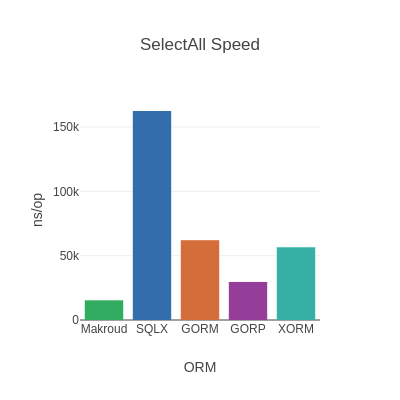
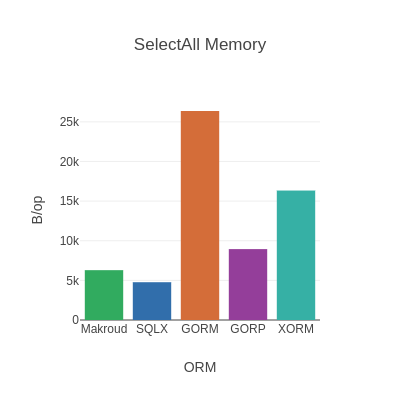
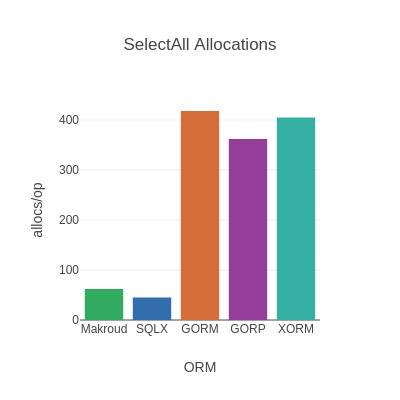
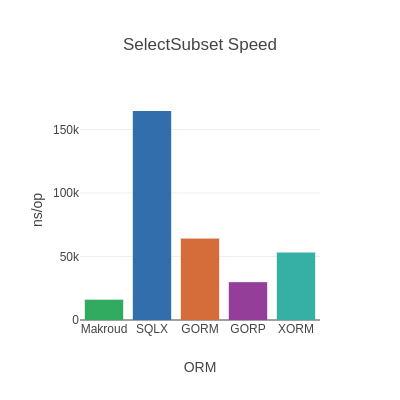
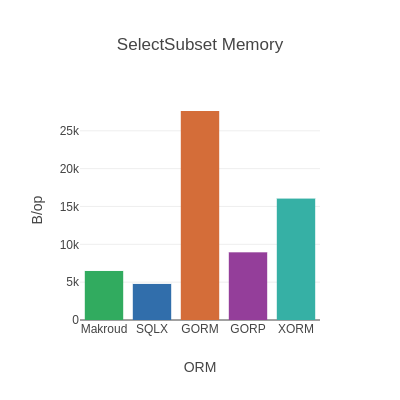
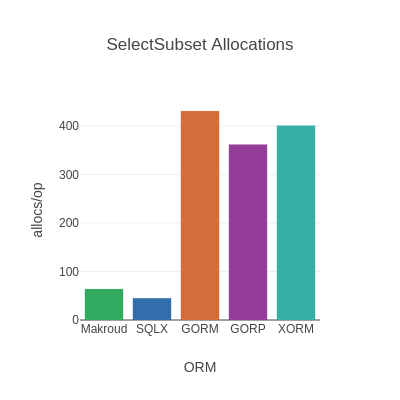
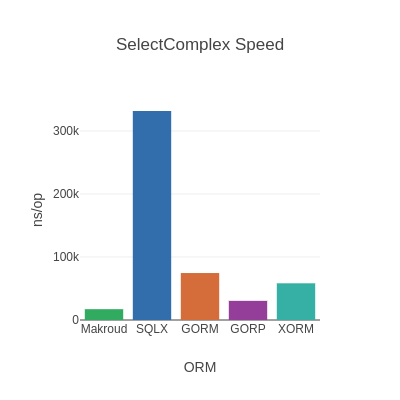
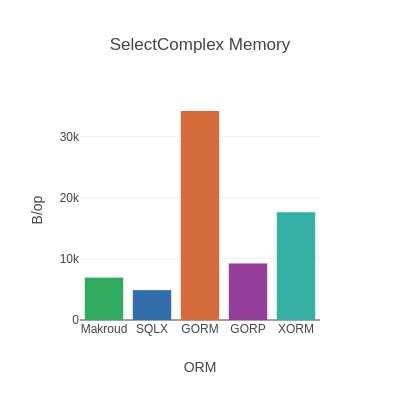
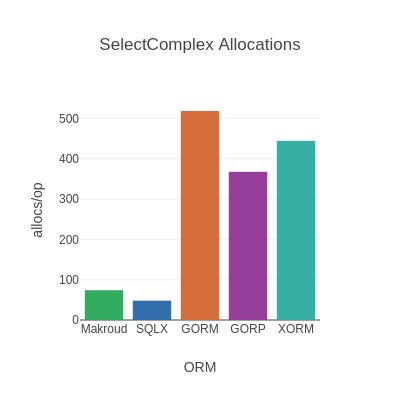
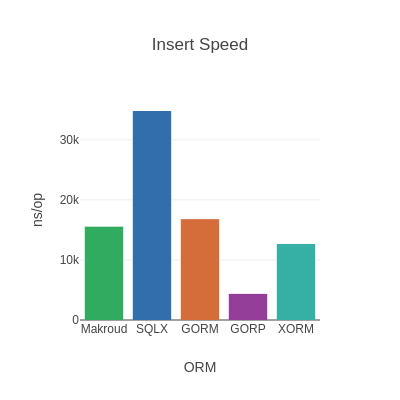
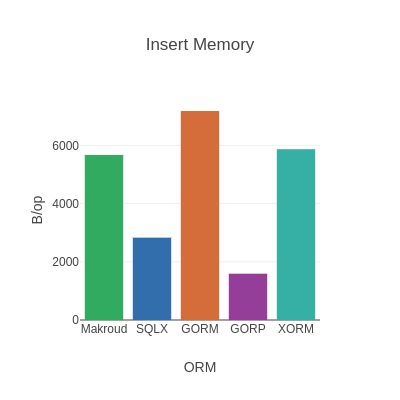
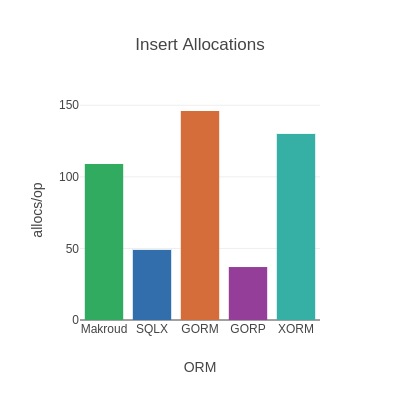
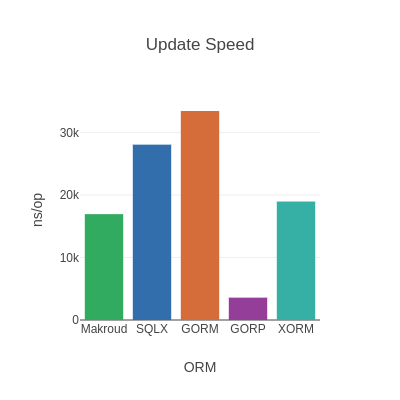
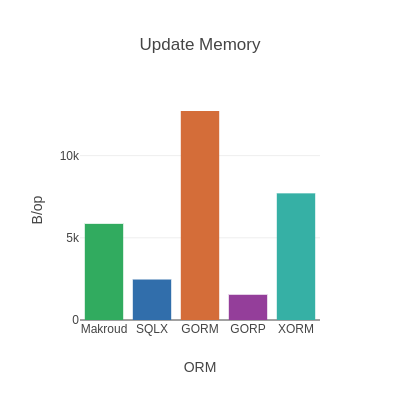
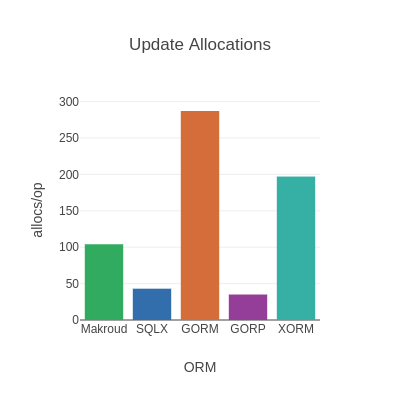
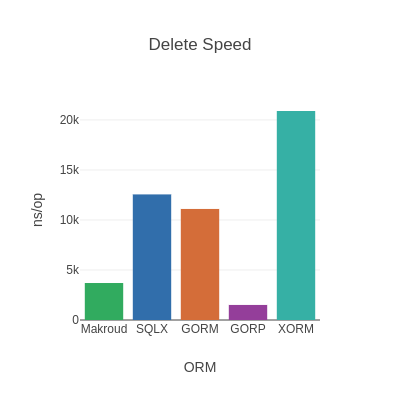
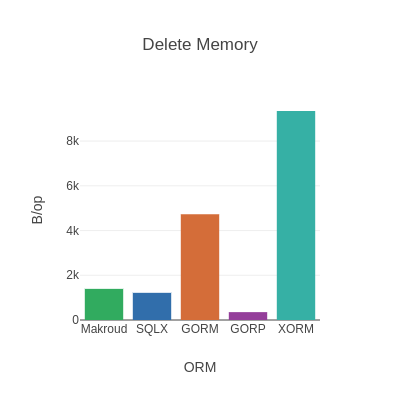
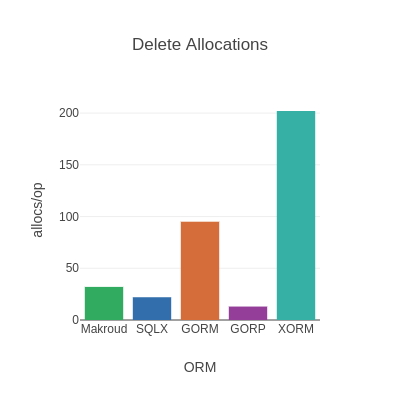
A benchmark repository containing result with other ORM or Mapper using reflection is available.
NOTE: A benchmark is always an observation, not a measurement of performance.
Development
Docker
The test suite is running on PostgreSQL. We use Docker to create a running container using scripts/database.
Testing
To run the test suite, simply execute:
scripts/test
Also, you can execute the linter with:
scripts/lint
Notes
If you have to examine rows generated from unit test, you can prevent the test suite to cleanup by using:
DB_KEEP=true scripts/test
Then, you can access the database with:
scripts/database --client
Random
Because sometimes it's hard to think of a good test fixture, using generators can save your productivity.
This website was a great help to write unit test: http://www.fantasynamegenerators.com
License
This is Free Software, released under the MIT License.
Contributing
Don't hesitate ;)
 Documentation

Overview 
Package makroud provides a high level SQL Connector. At the moment, only PostgreSQL is supported.
It's an advanced mapper and/or a lightweight ORM that relies on reflection.
For further informations, you can read this documentation: https://github.com/ulule/makroud/blob/master/README.md
Or you can discover makroud with these examples. First, you have to create a driver:
driver, err := makroud.New(
    makroud.Host(cfg.Host),
    makroud.Port(cfg.Port),
    makroud.User(cfg.User),
    makroud.Password(cfg.Password),
    makroud.Database(cfg.Name),
    makroud.SSLMode(cfg.SSLMode),
    makroud.MaxOpenConnections(cfg.MaxOpenConnections),
    makroud.MaxIdleConnections(cfg.MaxIdleConnections),
)
Then, define a model:
type User struct {
    ID        string `makroud:"column:id,pk:ulid"`
    Email     string `makroud:"column:email"`
    Password  string `makroud:"column:password"`
    Country   string `makroud:"column:country"`
    Locale    string `makroud:"column:locale"`
}
Execute an insert:
user := &User{
    Email:    "gilles@ulule.com",
    Password: "019a7bdf56b9f48e18096d62b21f",
    Country:  "FR",
    Locale:   "fr",
}

err := makroud.Save(ctx, driver, user)
Or an update:
user.Email = "gilles.fabio@ulule.com"

err := makroud.Save(ctx, driver, user)
Or execute a simple query without model:
import "github.com/ulule/loukoum/v3"

list := []string{}

stmt := loukoum.Update("users").
    Set(
        loukoum.Pair("updated_at", loukoum.Raw("NOW()")),
        loukoum.Pair("status", status),
    ).
    Where(loukoum.Condition("group_id").Equal(gid)).
    Returning("id")

err := makroud.Exec(ctx, driver, stmt, &list)
Index 
- Constants
- Variables
- func Archive(ctx context.Context, driver Driver, model Model) error
- func Count(ctx context.Context, driver Driver, stmt builder.Builder) (int64, error)
- func DebugField(field Field) string
- func DebugTag(tag Tag) string
- func DebugTagProperty(prop TagProperty) string
- func DebugTags(tags Tags) string
- func Delete(ctx context.Context, driver Driver, model Model) error
- func Exec(ctx context.Context, driver Driver, stmt builder.Builder, dest ...interface{}) error
- func FloatCount(ctx context.Context, driver Driver, stmt builder.Builder) (float64, error)
- func GenerateULID(driver Driver) string
- func GenerateUUIDV1(driver Driver) string
- func GenerateUUIDV4(driver Driver) string
- func IsErrNoRows(err error) bool
- func Log(driver Driver, queries Queries, duration time.Duration)
- func Preload(ctx context.Context, driver Driver, out interface{}, ...) error
- func RawExec(ctx context.Context, driver Driver, query string, dest ...interface{}) error
- func Retry(handler func(Driver) error, drivers ...Driver) (err error)
- func Save(ctx context.Context, driver Driver, model Model) error
- func Transaction(driver Driver, handler func(driver Driver) error) error
- type AssociationType
- type Client
- func (c *Client) Begin() (Driver, error)
- func (c *Client) Close() error
- func (c *Client) Commit() error
- func (c *Client) DriverName() string
- func (c *Client) Exec(ctx context.Context, query string, args ...interface{}) error
- func (c *Client) FindAll(ctx context.Context, dest interface{}, query string, args ...interface{}) error
- func (c *Client) FindOne(ctx context.Context, dest interface{}, query string, args ...interface{}) error
- func (c *Client) MustExec(ctx context.Context, query string, args ...interface{})
- func (c *Client) MustQuery(ctx context.Context, query string, arg interface{}) Rows
- func (c *Client) Ping() error
- func (c *Client) Prepare(ctx context.Context, query string) (Statement, error)
- func (c *Client) Query(ctx context.Context, query string, arg interface{}) (Rows, error)
- func (c *Client) Rollback() error
- type ClientOptions
- type Columns
- type Driver
- type FKType
- type Field
- func (field Field) ColumnName() string
- func (field Field) ColumnPath() string
- func (field Field) FieldIndex() []int
- func (field Field) FieldName() string
- func (field Field) ForeignKey() string
- func (field Field) HasDefault() bool
- func (field Field) HasRelation() bool
- func (field Field) HasULID() bool
- func (field Field) HasUUIDV1() bool
- func (field Field) HasUUIDV4() bool
- func (field Field) IsAssociation() bool
- func (field Field) IsAssociationType(kind AssociationType) bool
- func (field Field) IsCreatedKey() bool
- func (field Field) IsDeletedKey() bool
- func (field Field) IsExcluded() bool
- func (field Field) IsForeignKey() bool
- func (field Field) IsPrimaryKey() bool
- func (field Field) IsUpdatedKey() bool
- func (field Field) ModelName() string
- func (field Field) RelationName() string
- func (field Field) String() string
- func (field Field) TableName() string
- func (field Field) Type() reflect.Type
- type ForeignKey
- type Logger
- type Mapper
- type Model
- type ModelOpts
- type Option
- func Cache(enabled bool) Option
- func Database(dbname string) Option
- func DisableSSL() Option
- func EnableSSL() Option
- func EnableSavepoint() Option
- func Host(host string) Option
- func MaxIdleConnections(maximum int) Option
- func MaxOpenConnections(maximum int) Option
- func Password(password string) Option
- func Port(port int) Option
- func SSLMode(mode string) Option
- func Timezone(timezone string) Option
- func User(user string) Option
- func WithLogger(logger Logger) Option
- type PKType
- type PreloadHandler
- type PrimaryKey
- type PrimaryKeyDefault
- type Queries
- type Query
- type Reference
- type ReferenceObject
- func (object ReferenceObject) ColumnName() string
- func (object ReferenceObject) ColumnPath() string
- func (object ReferenceObject) Columns() []string
- func (object ReferenceObject) DeletedKeyName() string
- func (object ReferenceObject) DeletedKeyPath() string
- func (object ReferenceObject) FieldName() string
- func (object ReferenceObject) ForeignKeyType() FKType
- func (object ReferenceObject) HasDeletedKey() bool
- func (object ReferenceObject) IsForeignKey() bool
- func (object ReferenceObject) IsPrimaryKey() bool
- func (object ReferenceObject) Model() Model
- func (object ReferenceObject) ModelName() string
- func (object ReferenceObject) PrimaryKeyType() PKType
- func (object ReferenceObject) Schema() *Schema
- func (object ReferenceObject) TableName() string
- type Row
- type Rows
- type Schema
- func (schema Schema) ColumnPaths() Columns
- func (schema Schema) Columns() Columns
- func (schema Schema) CreatedKeyName() string
- func (schema Schema) CreatedKeyPath() string
- func (schema Schema) DeletedKeyName() string
- func (schema Schema) DeletedKeyPath() string
- func (schema Schema) HasColumn(column string) bool
- func (schema Schema) HasCreatedKey() bool
- func (schema Schema) HasDeletedKey() bool
- func (schema Schema) HasUpdatedKey() bool
- func (schema Schema) Model() Model
- func (schema Schema) ModelName() string
- func (schema Schema) PrimaryKey() PrimaryKey
- func (schema Schema) ScanRow(row Row, model Model) error
- func (schema Schema) ScanRows(rows Rows, model Model) error
- func (schema Schema) TableName() string
- func (schema Schema) UpdatedKeyName() string
- func (schema Schema) UpdatedKeyPath() string
- type Selector
- func (selector *Selector) Close() error
- func (selector *Selector) Ping() error
- func (selector *Selector) RetryAliases(handler func(Driver) error, aliases ...string) error
- func (selector *Selector) RetryMaster(handler func(Driver) error) error
- func (selector *Selector) Using(alias string) (Driver, error)
- type SelectorConfigurations
- type Statement
- type Tag
- type TagProperty
- type Tags
- type TagsAnalyzerOption
- type TagsAnalyzerOptions
Constants 
const (
	// FKUnknownType is an unknown foreign key.
	FKUnknownType = FKType(iota)
	// FKIntegerType uses an integer as foreign key.
	FKIntegerType
	// ForeignKeyString uses a string as foreign key.
	FKStringType
	// FKOptionalIntegerType uses an optional integer as foreign key.
	FKOptionalIntegerType
	// FKOptionalStringType uses an optional string as foreign key.
	FKOptionalStringType
)
Foreign key types.
const (
	AssociationTypeUndefined = AssociationType(iota)
	AssociationTypeOne
	AssociationTypeMany
)
Association types.
const (
	// PKUnknownType is an unknown primary key.
	PKUnknownType = PKType(iota)
	// PKIntegerType uses an integer as primary key.
	PKIntegerType
	// PrimaryKeyString uses a string as primary key.
	PKStringType
)
Primary key types.
const (
	// PrimaryKeyDBDefault uses internal db mechanism to define primary key value.
	PrimaryKeyDBDefault = PrimaryKeyDefault(iota)
	// PrimaryKeyULIDDefault uses a ulid generator to define primary key value.
	PrimaryKeyULIDDefault
	// PrimaryKeyUUIDV1Default uses a uuid v1 generator to define primary key value.
	PrimaryKeyUUIDV1Default
	// PrimaryKeyUUIDV4Default uses a uuid v4 generator to define primary key value.
	PrimaryKeyUUIDV4Default
)
PrimaryKey default types.
const (
	// TagName defines makroud tag namespace.
	TagName = "makroud"
	// TagNameShort defines makroud tag namespace in short version.
	TagNameShort = "mk"
	// TagNameAlt defines sqlx tag namespace for backward compatibility.
	TagNameAlt = "db"
)
const (
	TagKeyIgnored       = "-"
	TagKeyDefault       = "default"
	TagKeyColumn        = "column"
	TagKeyColumnShort   = "col"
	TagKeyForeignKey    = "fk"
	TagKeyPrimaryKey    = "pk"
	TagKeyRelation      = "relation"
	TagKeyRelationShort = "rel"
	TagKeyULID          = "ulid"
	TagKeyUUIDV1        = "uuid-v1"
	TagKeyUUIDV4        = "uuid-v4"
)
Tag modifiers on Model.
const ClientDriver = "postgres"
ClientDriver define the driver name used in makroud.
const DefaultSelector = MasterSelector
DefaultSelector defines the default selector alias.
const MasterSelector = "master"
MasterSelector defines the master alias.
const SlaveSelector = "slave"
SlaveSelector defines the slave alias.
Variables 
var (
	// ErrNoRows is returned when query doesn't return a row.
	ErrNoRows = fmt.Errorf("no rows in result set")
	// ErrInvalidDriver is returned when given driver is undefined.
	ErrInvalidDriver = fmt.Errorf("a makroud driver is required")
	// ErrPointerRequired is returned when given value is not a pointer.
	ErrPointerRequired = fmt.Errorf("a pointer is required")
	// ErrStructRequired is returned when given value is not a struct.
	ErrStructRequired = fmt.Errorf("a struct is required")
	// ErrSchemaColumnRequired is returned when we cannot find a column in current schema.
	ErrSchemaColumnRequired = fmt.Errorf("cannot find column in schema")
	// ErrSchemaCreatedKey is returned when we cannot find a created key in given schema.
	ErrSchemaCreatedKey = fmt.Errorf("cannot find created key in schema")
	// ErrSchemaUpdatedKey is returned when we cannot find a updated key in given schema.
	ErrSchemaUpdatedKey = fmt.Errorf("cannot find updated key in schema")
	// ErrSchemaDeletedKey is returned when we cannot find a deleted key in given schema.
	ErrSchemaDeletedKey = fmt.Errorf("cannot find deleted key in schema")
	// ErrPreloadInvalidSchema is returned when preload detect an invalid schema from given model.
	ErrPreloadInvalidSchema = fmt.Errorf("given model has an invalid schema")
	// ErrPreloadInvalidModel is returned when preload detect an invalid model.
	ErrPreloadInvalidModel = fmt.Errorf("given model is invalid")
	// ErrPreloadInvalidPath is returned when preload detect an invalid path.
	ErrPreloadInvalidPath = fmt.Errorf("given path is invalid")
	// ErrSelectorNotFoundConnection is returned when the required connection does not exists in selector connections.
	ErrSelectorNotFoundConnection = fmt.Errorf("cannot find connection in selector")
	// ErrSelectorMissingRetryConnection is returned when the retry mechanism has no connection available from selector.
	ErrSelectorMissingRetryConnection = fmt.Errorf("cannot find a healthy connection in selector")
)
Makroud general errors.
var TagsKeyMapper = map[string]string{
	TagKeyColumnShort:   TagKeyColumn,
	TagKeyRelationShort: TagKeyRelation,
}
TagsKeyMapper is a mapper that convert tag key to another key (aliasing).
var TagsList = []string{
	TagName,
	TagNameShort,
	TagNameAlt,
}
TagsList is a list of supported tags, this include sqlx and makroud one.
var TagsNameMapper = map[string]string{
	TagNameAlt: TagKeyColumn,
}
TagsNameMapper is a mapper that convert supported tag name to makroud one (migrate).
Functions 
func DebugField 
DebugField returns a human readable version of given instance.
func DebugTagProperty 
func DebugTagProperty(prop TagProperty) string
DebugTagProperty returns a human readable version of given instance.
func Exec 
Exec will execute given query from a Loukoum builder. If an object is given, it will mutate it to match the row values.
func FloatCount 
FloatCount will execute given query to return a number (in float) from a aggregate function.
func GenerateUUIDV1 
GenerateUUIDV1 generates a new uuid v1.
func GenerateUUIDV4 
GenerateUUIDV4 generates a new uuid v4.
func IsErrNoRows 
IsErrNoRows returns if given error is a "no rows" error.
func Preload 
func Preload(ctx context.Context, driver Driver, out interface{}, handlers ...PreloadHandler) error
Preload preloads related fields.
func RawExec 
RawExec will execute given query. If an object is given, it will mutate it to match the row values.
Types 
type AssociationType 
type AssociationType uint8
AssociationType define an association type.
func (AssociationType) String 
func (e AssociationType) String() string
type Client 
type Client struct {
	// contains filtered or unexported fields
}
Client is a wrapper that can interact with the database, it's an implementation of Driver.
func NewDebugClient 
NewDebugClient returns a new client with a specific engine. Use this with extreme caution, please use New() or NewWithOptions() instead...
func NewWithOptions 
func NewWithOptions(options *ClientOptions) (*Client, error)
NewWithOptions returns a new Client instance.
func (*Client) DriverName 
DriverName returns the driver name used by this driver.
func (*Client) FindAll 
func (c *Client) FindAll(ctx context.Context, dest interface{}, query string, args ...interface{}) error
FindAll executes this named statement to fetch a list of records. Output must be a pointer to a slice of value.
func (*Client) FindOne 
func (c *Client) FindOne(ctx context.Context, dest interface{}, query string, args ...interface{}) error
FindOne executes this named statement to fetch one record. If there is no row, an error is returned. Output must be a pointer to a value.
func (*Client) MustExec 
MustExec executes a named statement using given arguments. If an error has occurred, it panics.
func (*Client) MustQuery 
MustQuery executes a named statement that returns rows using given arguments. If an error has occurred, it panics.
func (*Client) Prepare 
Prepare creates a prepared statement for later queries or executions. Multiple queries or executions may be run concurrently from the returned statement.
type ClientOptions 
type ClientOptions struct {
	Port               int
	Host               string
	User               string
	Password           string
	DBName             string
	SSLMode            string
	Timezone           string
	MaxOpenConnections int
	MaxIdleConnections int
	WithCache          bool
	SavepointEnabled   bool
	Logger             Logger
}
ClientOptions configure a Client instance.
func NewClientOptions 
func NewClientOptions() *ClientOptions
NewClientOptions creates a new ClientOptions instance with default options.
func (ClientOptions) String 
func (e ClientOptions) String() string
type Columns 
type Columns []string
Columns is a list of table columns.
func GetColumns 
GetColumns returns a comma-separated string representation of a model's table columns.
type Driver 
type Driver interface {

	// Exec executes a named statement using given arguments.
	Exec(ctx context.Context, query string, args ...interface{}) error

	// MustExec executes a named statement using given arguments.
	// If an error has occurred, it panics.
	MustExec(ctx context.Context, query string, args ...interface{})

	// Query executes a named statement that returns rows using given arguments.
	Query(ctx context.Context, query string, arg interface{}) (Rows, error)

	// MustQuery executes a named statement that returns rows using given arguments.
	// If an error has occurred, it panics.
	MustQuery(ctx context.Context, query string, arg interface{}) Rows

	// Prepare creates a prepared statement for later queries or executions.
	// Multiple queries or executions may be run concurrently from the returned statement.
	Prepare(ctx context.Context, query string) (Statement, error)

	// FindOne executes this named statement to fetch one record.
	// If there is no row, an error is returned.
	// Output must be a pointer to a value.
	FindOne(ctx context.Context, dest interface{}, query string, args ...interface{}) error

	// FindAll executes this named statement to fetch a list of records.
	// Output must be a pointer to a slice of value.
	FindAll(ctx context.Context, dest interface{}, query string, args ...interface{}) error

	// Close closes the underlying connection.
	Close() error

	// Ping verifies that the underlying connection is healthy.
	Ping() error

	// DriverName returns the driver name used by this driver.
	DriverName() string

	// Begin a new transaction.
	Begin() (Driver, error)

	// Rollback the associated transaction.
	Rollback() error

	// Commit the associated transaction.
	Commit() error
	// contains filtered or unexported methods
}
Driver is a high level abstraction of a database connection or a transaction.
type FKType 
type FKType uint8
FKType define a foreign key type.
func (FKType) IsCompatible 
IsCompatible returns if given primary key is compatible with foreign key.
func (FKType) IsOptional 
IsOptional returns if foreign key has an optional type.
type Field 
type Field struct {
	// contains filtered or unexported fields
}
Field defines the column name, field and options from model.
For example: If we have an User, we could have this primary key defined in User's schema.
Field {
    ModelName:  User,
    TableName:  users,
    FieldName:  AvatarID,
    ColumnName: avatar_id,
    ColumnPath: users.avatar_id,
}
func NewField 
func NewField(driver Driver, schema *Schema, model Model, name string, args ...ModelOpts) (*Field, error)
NewField creates a new field using given model and name.
func (Field) ColumnName 
ColumnName returns the field's column name.
func (Field) ColumnPath 
ColumnPath returns the field's full column path.
func (Field) FieldIndex 
FieldIndex define the struct field index used for this field.
func (Field) ForeignKey 
ForeignKey returns the field foreign key's table name.
func (Field) HasDefault 
HasDefault returns if the field has a default value and should be in returning statement.
func (Field) HasRelation 
HasRelation returns if the field has a explicit relation.
func (Field) IsAssociation 
IsAssociation returns if the field is an association.
func (Field) IsAssociationType 
func (field Field) IsAssociationType(kind AssociationType) bool
IsAssociationType returns if the field has given association type.
func (Field) IsCreatedKey 
IsCreatedKey returns if the field is a created key.
func (Field) IsDeletedKey 
IsDeletedKey returns if the field is a deleted key.
func (Field) IsExcluded 
IsExcluded returns if the field excluded. (anonymous, private...)
func (Field) IsForeignKey 
IsForeignKey returns if the field is a foreign key.
func (Field) IsPrimaryKey 
IsPrimaryKey returns if the field is a primary key.
func (Field) IsUpdatedKey 
IsUpdatedKey returns if the field is a updated key.
func (Field) RelationName 
RelationName returns the field relation name.
type ForeignKey 
type ForeignKey struct {
	Field
	// contains filtered or unexported fields
}
ForeignKey is a composite object that define a foreign key for a model. This foreign key will be used later for Preload...
For example: If we have an User, we could have this primary key defined in User's schema.
ForeignKey {
    ModelName:  User,
    TableName:  users,
    FieldName:  AvatarID,
    ColumnName: avatar_id,
    ColumnPath: users.avatar_id,
    Reference:  avatars,
    Type:       int64,
}
func NewForeignKey 
func NewForeignKey(field *Field) (*ForeignKey, error)
NewForeignKey creates a foreign key from a field instance.
func (ForeignKey) Reference 
func (key ForeignKey) Reference() string
Reference returns the foreign key's table name.
type Logger 
type Logger interface {
	// Log push what query was executed and its duration.
	Log(query string, duration time.Duration)
}
Logger is an observer that collect queries executed in makroud.
type Mapper 
type Mapper map[string]interface{}
Mapper will be used to mutate a Model with row values.
type Option 
type Option func(*ClientOptions) error
Option is used to define Client configuration.
func DisableSSL 
func DisableSSL() Option
DisableSSL will configure the Client to disable SSL mode.
func EnableSavepoint 
func EnableSavepoint() Option
EnableSavepoint will enable the SAVEPOINT postgresql feature.
func MaxIdleConnections 
MaxIdleConnections will configure the Client to keep this maximum number of idle connections in the connection pool.
func MaxOpenConnections 
MaxOpenConnections will configure the Client to use this maximum number of open connections to the database.
type PKType 
type PKType uint8
PKType define a primary key type.
func (PKType) IsCompatible 
IsCompatible returns if given foreign key is compatible with primary key.
type PreloadHandler 
type PreloadHandler struct {
	// contains filtered or unexported fields
}
PreloadHandler defines what resources should be preloaded.
func WithPreloadCallback 
func WithPreloadCallback(field string, callback func(query builder.Select) builder.Select) PreloadHandler
WithPreloadCallback returns a handler that preload a field with conditions.
func WithPreloadField 
func WithPreloadField(field string) PreloadHandler
WithPreloadField returns a handler that preload a field.
func WithUnscopedPreload 
func WithUnscopedPreload(handler PreloadHandler) PreloadHandler
WithUnscopedPreload unscopes given preload handler.
type PrimaryKey 
type PrimaryKey struct {
	Field
	// contains filtered or unexported fields
}
PrimaryKey is a composite object that define a primary key for a model.
For example: If we have an User, we could have this primary key defined in User's schema.
PrimaryKey {
    ModelName: User,
    TableName: users,
    FieldName: ID,
    ColumnName: id,
    ColumnPath: users.id,
    Type: int64,
    Default: db,
}
func NewPrimaryKey 
func NewPrimaryKey(field *Field) (*PrimaryKey, error)
NewPrimaryKey creates a primary key from a field instance.
func (PrimaryKey) Default 
func (key PrimaryKey) Default() PrimaryKeyDefault
Default returns the primary key's default mechanism.
func (PrimaryKey) Value 
func (key PrimaryKey) Value(model Model) (interface{}, error)
Value returns the primary key's value, or an error if undefined.
func (PrimaryKey) ValueOpt 
func (key PrimaryKey) ValueOpt(model Model) (interface{}, bool)
ValueOpt may returns the primary key's value, if defined.
type PrimaryKeyDefault 
type PrimaryKeyDefault uint8
PrimaryKeyDefault define how primary key value is generated.
func (PrimaryKeyDefault) String 
func (e PrimaryKeyDefault) String() string
type Query 
Query is a query generated by loukoum and makroud.
func NewRawQuery 
NewRawQuery creates a new Query instance from given query.
type Reference 
type Reference struct {
	Field
	// contains filtered or unexported fields
}
Reference defines a model relationship.
func NewReference 
NewReference creates a reference from a field instance.
func (Reference) IsLocal 
IsLocal returns if reference is local from the model, or from another model (remote).
func (Reference) Local 
func (reference Reference) Local() ReferenceObject
Local returns the local model.
func (Reference) Remote 
func (reference Reference) Remote() ReferenceObject
Remote returns the remote model.
type ReferenceObject 
type ReferenceObject struct {
	// contains filtered or unexported fields
}
ReferenceObject defines a model used by Reference.
func (ReferenceObject) ColumnName 
func (object ReferenceObject) ColumnName() string
ColumnName returns the column name of this reference.
func (ReferenceObject) ColumnPath 
func (object ReferenceObject) ColumnPath() string
ColumnPath returns the full column path of this reference.
func (ReferenceObject) Columns 
func (object ReferenceObject) Columns() []string
Columns returns this reference columns.
func (ReferenceObject) DeletedKeyName 
func (object ReferenceObject) DeletedKeyName() string
DeletedKeyName returns reference schema deleted key column name.
func (ReferenceObject) DeletedKeyPath 
func (object ReferenceObject) DeletedKeyPath() string
DeletedKeyPath returns reference schema deleted key column path.
func (ReferenceObject) FieldName 
func (object ReferenceObject) FieldName() string
FieldName returns the field name of this reference.
func (ReferenceObject) ForeignKeyType 
func (object ReferenceObject) ForeignKeyType() FKType
ForeignKeyType returns this reference foreign key type.
func (ReferenceObject) HasDeletedKey 
func (object ReferenceObject) HasDeletedKey() bool
HasDeletedKey returns if an deleted key is defined for this reference.
func (ReferenceObject) IsForeignKey 
func (object ReferenceObject) IsForeignKey() bool
IsForeignKey returns if this reference is a foreign key.
func (ReferenceObject) IsPrimaryKey 
func (object ReferenceObject) IsPrimaryKey() bool
IsPrimaryKey returns if this reference is a primary key.
func (ReferenceObject) Model 
func (object ReferenceObject) Model() Model
Model returns the reference model.
func (ReferenceObject) ModelName 
func (object ReferenceObject) ModelName() string
ModelName returns the model name of this reference.
func (ReferenceObject) PrimaryKeyType 
func (object ReferenceObject) PrimaryKeyType() PKType
PrimaryKeyType returns this reference primary key type.
func (ReferenceObject) Schema 
func (object ReferenceObject) Schema() *Schema
Schema returns the reference schema.
func (ReferenceObject) TableName 
func (object ReferenceObject) TableName() string
TableName returns the table name of this reference.
type Row 
type Row interface {
	// Write copies the columns in the current row into the given map.
	Write(dest map[string]interface{}) error
	// Columns returns the column names.
	Columns() ([]string, error)
	// Scan copies the columns in the current row into the values pointed at by dest.
	// The number of values in dest must be the same as the number of columns in Rows.
	Scan(dest ...interface{}) error
}
A Row is a simple row.
type Rows 
type Rows interface {
	// Next prepares the next result row for reading with the MapScan method.
	// It returns true on success, or false if there is no next result row or an error
	// happened while preparing it.
	// Err should be consulted to distinguish between the two cases.
	// Every call to MapScan, even the first one, must be preceded by a call to Next.
	Next() bool
	// Close closes the Rows, preventing further enumeration/iteration.
	// If Next is called and returns false and there are no further result sets, the Rows are closed automatically
	// and it will suffice to check the result of Err.
	Close() error
	// Err returns the error, if any, that was encountered during iteration.
	// Err may be called after an explicit or implicit Close.
	Err() error
	// Write copies the columns in the current row into the given map.
	Write(dest map[string]interface{}) error
	// Columns returns the column names.
	Columns() ([]string, error)
	// Scan copies the columns in the current row into the values pointed at by dest.
	// The number of values in dest must be the same as the number of columns in Rows.
	Scan(dest ...interface{}) error
}
A Rows is an iteratee of a list of records.
type Schema 
type Schema struct {
	// contains filtered or unexported fields
}
Schema is a model schema.
func GetSchema 
GetSchema returns the schema from given model. If the schema does not exists, it returns an error.
func (Schema) ColumnPaths 
ColumnPaths returns schema column with table prefix.
func (Schema) CreatedKeyName 
CreatedKeyName returns schema created key column name.
func (Schema) CreatedKeyPath 
CreatedKeyPath returns schema created key column path.
func (Schema) DeletedKeyName 
DeletedKeyName returns schema deleted key column name.
func (Schema) DeletedKeyPath 
DeletedKeyPath returns schema deleted key column path.
func (Schema) HasCreatedKey 
HasCreatedKey returns if a created key is defined for current schema.
func (Schema) HasDeletedKey 
HasDeletedKey returns if a deleted key is defined for current schema.
func (Schema) HasUpdatedKey 
HasUpdatedKey returns if an updated key is defined for current schema.
func (Schema) PrimaryKey 
func (schema Schema) PrimaryKey() PrimaryKey
PrimaryKey returns the schema primary key.
func (Schema) UpdatedKeyName 
UpdatedKeyName returns schema deleted key column name.
func (Schema) UpdatedKeyPath 
UpdatedKeyPath returns schema updated key column path.
type Selector 
type Selector struct {
	// contains filtered or unexported fields
}
Selector contains a pool of drivers indexed by their name.
func NewSelector 
func NewSelector(configurations map[string]*ClientOptions) (*Selector, error)
NewSelector returns a new selector containing a pool of drivers with given configuration.
func NewSelectorWithDriver 
NewSelectorWithDriver returns a new selector containing the given connection.
func (*Selector) RetryAliases 
RetryAliases is an helper calling Retry with a list of aliases.
func (*Selector) RetryMaster 
RetryMaster is an helper calling RetryAliases with a slave then a master connection.
type SelectorConfigurations 
type SelectorConfigurations map[string]*ClientOptions
SelectorConfigurations define a list of configurations for a pool of drivers.
type Statement 
type Statement interface {
	// Close closes the statement.
	Close() error
	// Exec executes this named statement using the struct passed.
	Exec(ctx context.Context, args []interface{}) error
	// QueryRow executes this named statement returning a single row.
	QueryRow(ctx context.Context, args []interface{}) (Row, error)
	// QueryRows executes this named statement returning a list of rows.
	QueryRows(ctx context.Context, args []interface{}) (Rows, error)
	// FindOne executes this named statement to fetch one record.
	// If there is no row, an error is returned.
	// Output must be a pointer to a value.
	FindOne(ctx context.Context, dest interface{}, args []interface{}) error
	// FindAll executes this named statement to fetch a list of records.
	// Output must be a pointer to a slice of value.
	FindAll(ctx context.Context, dest interface{}, args []interface{}) error
}
A Statement from prepare.
type Tag 
type Tag struct {
	// contains filtered or unexported fields
}
Tag is tag defined in a model.
func (Tag) Properties 
func (tag Tag) Properties() []TagProperty
Properties returns tag properties.
type TagProperty 
type TagProperty struct {
	// contains filtered or unexported fields
}
TagProperty is a struct tag property.
func (TagProperty) String 
func (prop TagProperty) String() string
String returns a human readable version of current instance.
type Tags 
type Tags []Tag
Tags is a group of tag defined in a model.
func GetTags 
func GetTags(field reflect.StructField, args ...TagsAnalyzerOption) Tags
GetTags returns field tags.
func (*Tags) Set 
func (tags *Tags) Set(name string, property TagProperty)
Set sets the given tag into the slice.
type TagsAnalyzerOption 
type TagsAnalyzerOption func(*TagsAnalyzerOptions)
TagsAnalyzerOption is a functional option to configure TagsAnalyzerOptions.
type TagsAnalyzerOptions 
type TagsAnalyzerOptions struct {
	// Name defines the default tag name.
	Name string
	// Collector defines what tags should be analyzed.
	Collector []string
	// NameMapper defines how to convert a supported tag to the default one.
	NameMapper map[string]string
	// KeyMapper defines how to convert a tag key tag to another one (aliasing).
	KeyMapper map[string]string
}
TagsAnalyzerOptions defines the tags analyzer behavior.
 Source Files
 Directories